
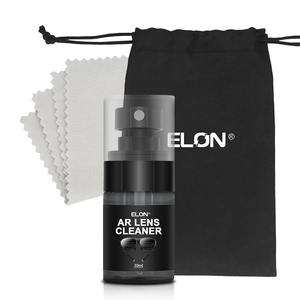
Engineered for scratch-free debris pickup, high oil sorption kinetics, and resilient branding that withstands commercial laundering cycles.
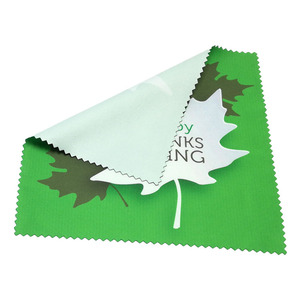
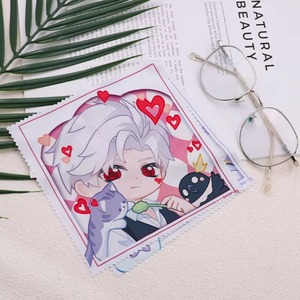
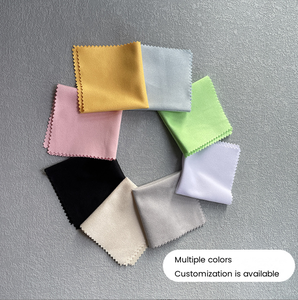
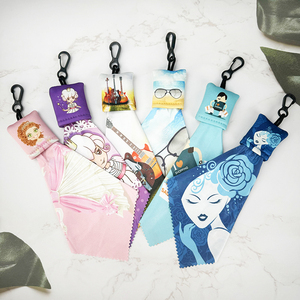
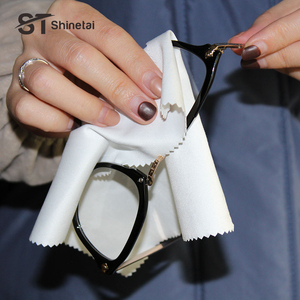
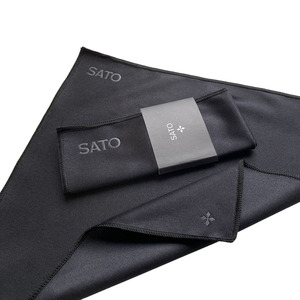
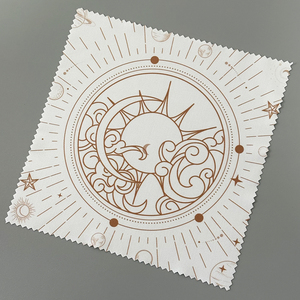
In optical dispensing, the microfiber cloth is far more than a branded packaging inclusion; it functions as an essential maintenance tool safeguarding multi-layer thin-film vacuum coatings. Standard spun filament fibers push dust across the lens, converting abrasive airborne quartz into microscratches. In contrast, technical-grade optical cloth leverages bicomponent conjugated extrusion—typically an 80% polyester and 20% polyamide matrix split via high-pressure chemical hydroentanglement.
This mechanical wedge configuration generates capillary forces capable of pulling sebaceous lipid smears, moisture, and sub-micron particulates deep into intra-fiber channels without scratching fragile Anti-Reflective (AR), oleophobic, or blue-light filtering layers.
Polyamide cores exhibit natural oleophilic properties, lifting oily facial deposits without requiring aggressive surfactant sprays.
Continuous synthetic filament yarns eliminate linting, avoiding contamination on freshly surfaced lenses.
Evaluate export grades based on physical yarn structure, fabric weight, and edge stability:
| Parameter | Standard Promotional | Optical Lab Grade |
|---|---|---|
| Blend Ratio | 100% Polyester | 80/20 or 70/30 Poly/Polyamide |
| Areal Weight | 160 – 180 GSM | 210 – 260 GSM (Dense Weft) |
| Fiber Splitting | Non-split (Flat tubular) | Bicomponent Star Wedge Split |
| Edge Treatment | Cold Cut (Prone to fraying) | Ultrasonic / Laser Sealed / Zigzag |
| Imprint Longevity | Surface pigment bleeding | Sublimation Dye Penetration |
B2B optical buyers face shifting regulatory mandates, circular economy demands, and multi-device consumer usage patterns.
Global optical retail groups increasingly mandate Global Recycled Standard (GRS) yarn certifications. Post-consumer PET bottles are mechanically repolymerized into filaments matching virgin tensile strength, lowering Scope 3 carbon compliance footprints.
Traditional mechanical pinking cuts suffer from filament pull and edge degradation after repeat washings. High-frequency ultrasonic knurling melts yarn borders simultaneously during cutting, delivering silky, scratch-free perimeters without needle stitching.
Patients now clean OLED smartwatch displays, camera optics, and tablet glass alongside progressive eyewear. Modern cloth formulations eliminate chemical sizing agents that could leave conductive residues on sensitive capacitive touchscreens.
Complete cleaning kits pair microfiber fabrics with alcohol-free, propellant-free lens solutions. Dispensing opticians prefer formulations verified safe for photochromic coatings, avoiding solvent-induced polymer crazing.
Combining rigorous Canadian logistics coordination with precision export-oriented manufacturing protocols.
We do not treat lens cloths as generic trade-show giveaways. Our equipment, yarn selection, and packaging protocols cater specifically to clinical eye care practices, prescription lens laboratories, and sunwear brands.
Zero risk of unexpected color deviations. A physical, printed proof photo is generated and transmitted for optical buyer sign-off prior to running batch production, ensuring exact Pantone match and edge alignment.
With operational hubs managing cross-border logistics across Canadian and North American distribution centers, we supply regional optical clinics and export volume container loads to global eyewear groups.
Streamlined communication lines connect optical buyers directly to technical product managers, providing real-time inventory confirmations, quote estimates, and custom packaging support within 24 hours.
From initial vector artwork preparation to international export dispatch, every phase follows strict ISO-compliant validation gates.
Submit your target dimensions (e.g., 15x15cm, 18x18cm), chosen yarn weight (200-250 GSM), and vector artwork (AI/EPS/PDF). Our technical team reviews print boundaries and color calibration.
We execute an ink-strike test or physical sample print. A detailed macro-photography proof is provided to confirm PMS fidelity, edge sealing, and hand-feel before mass textile slitting commences.
Following high-speed ultrasonic slicing, sublimation transfer, and individual PE/OPP bag packing, cartons are strapped, palletized, and routed via consolidated air or sea freight channels.
Key technical and logistical details regarding custom lens cloth manufacturing and international wholesale supply.
Connect with our technical export division to review fabric swatches, obtain calibrated Pantone mockups, and receive competitive tiered wholesale pricing.