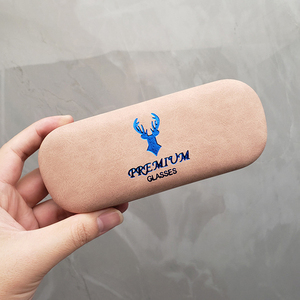
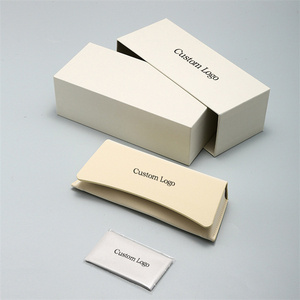
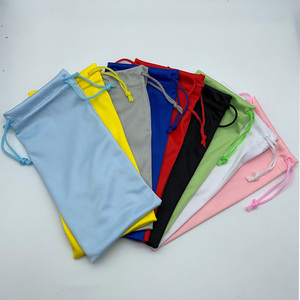
Engineered specifically for clinical dispensing, high-grade optical laboratories, and consumer retail applications. Every item meets stringent cleanroom yarn standards and abrasion thresholds.
Modern ophthalmic lenses rely heavily on thin-film nanometer coatings—ranging from hydro-oleophobic multi-layer anti-reflective (AR) stacks to broad-spectrum blue-filtering elements. Typical consumer packaging made of low-grade spun polyester often contains residual sizing agents, coarse particulate fillers, or unbonded filament ends. Under frictional transit, these elements create irreversible micro-scratching or transfer silicone oils that destabilize fluoropolymer coatings.
As an authoritative, CE-certified optical lens bags manufacturer and global exporter, our materials undergo meticulous split-fiber wedge processing (80/20 polyester/polyamide blend). This splits each microscopic filament into 16 cross-sectional trapezoidal edges, yielding superior capillary entrapment of lipophilic dust without relying on topical chemical finishes that violate European chemical directives.
Procurement officers for national optical chains and regional eyecare laboratories are upgrading their material verification standards. Here are the core structural shifts governing the optical accessory market.
Global retailers are shifting from virgin petroleum synthetics to Global Recycled Standard (GRS) post-consumer rPET yarns. This transition preserves electrostatic capture rates while fulfilling Corporate Sustainability Due Diligence Directives (CSDDD) across the European Union.
Solvent inks frequently release volatile vapors inside sealed packaging, causing chemical fogging on high-index polycarbonate and polyurethane substrates. Modern buyers require Oeko-Tex Standard 100 Class I aqueous sublimation and pad printing methods with total ink fixing.
Traditional drawstring optical pouches are evolving into multi-functional protective systems. Sourcing teams prioritize integrated inner divider envelopes for clip-ons, anti-static carbon filaments, and moisture-resistant internal thermoplastic polyurethane laminations.
Bridging the gap between industrial export agility and strict clinical-grade accuracy. Every manufacturing run is executed under disciplined quality control.
We eliminate guesswork. Prior to automated production runs, high-resolution macroscopic photography of the actual physical printed test article is provided for sizing, color-target matching, and edge-seam review.
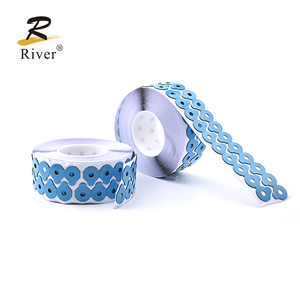
With an extensive ready-inventory of common metric dimensions (such as standard 16.5*7cm formats and 24*30mm laboratory consumable blocking pads), stock allocations ship rapidly without extended lead times.
Our optical lens bags, cloths, and associated fluids are formulated and finished to ensure neutrality across hydrophobic, oleophobic, and anti-static surface treatments without surface degradation.
Complete documentation packages accompany commercial shipments, including CE Declarations of Conformity, Material Safety Data Sheets (MSDS), and strict non-toxic textile testing declarations.
Clear, definitive specifications covering custom OEM/ODM parameters, minimum runs, fiber mechanics, and international delivery schedules.
Connect directly with our optical engineering and export team to access our complete B2B wholesale pricing schedules, custom fabric sample books, and complete compliance documentation.