Curated from our ISO-monitored manufacturing lines and Vaughan, Ontario logistics hub. Every unit undergoes split-matrix fiber verification, ultrasonic edge sealing, and multi-color logo calibration with physical proof sign-off prior to volume export.
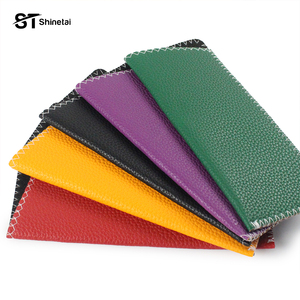
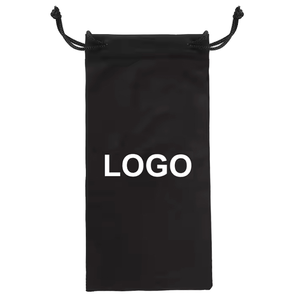
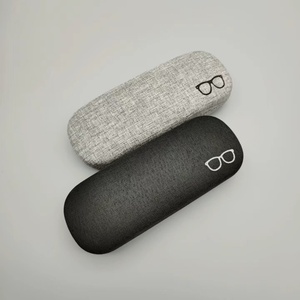
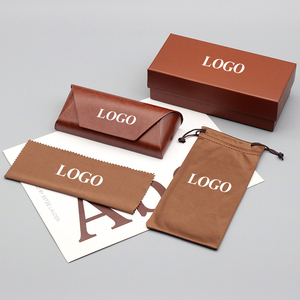
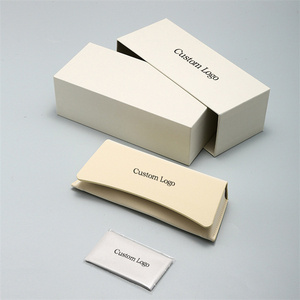
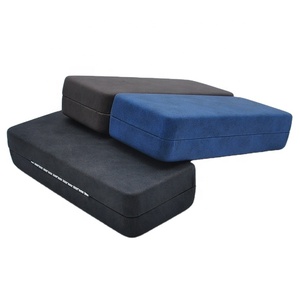
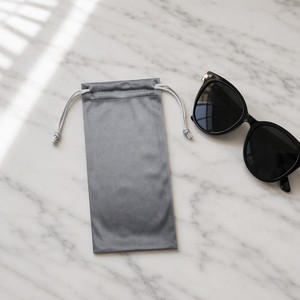
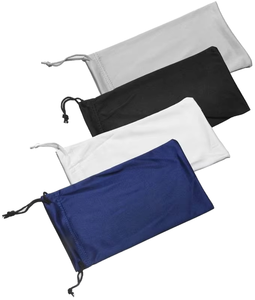
In professional ophthalmic and optometric dispensing, the microfiber cloth is far more than a branded giveaway—it is a critical mechanical interface that dictates the longevity of modern ophthalmic coatings. High-index lens substrates (1.67, 1.74) coupled with complex multi-layer anti-reflective (AR), hydrophobic, oleophobic, and anti-static vacuum-deposited stacks are susceptible to micro-abrasions caused by inadequate cleaning fibers.
Our CE Certified bulk microfiber cloths are engineered using an 80/20 or 70/30 composite split-matrix of polyester (polyethylene terephthalate) and polyamide (nylon 6). During conjugate spinning and continuous chemical splitting, each continuous filament is bifurcated into wedge-shaped sub-filaments measuring less than 0.13 decitex (roughly 1/100th the diameter of a human hair).
Unlike conventional round cotton or un-split synthetic fibers that merely drag particulate across the lens plane, our wedge-shaped cross-sections lift, shear, and encapsulate lipophilic oils, sebum, and microscopic inorganic grit within capillary interstitial micro-cavities. This eliminates scratching and guarantees full compliance with European CE Mark directives and ISO 12312-1 / EN 166 optical surface integrity standards.
Microscopic optical profiling reveals why split conjugate microfiber out-cleans traditional wiping media without chemical additives:
Send an InquiryEnterprise procurement requires verifiable technical data. The following matrix illustrates physical tolerance benchmarks across our bulk optical cloth categories verified under ASTM and ISO methodologies.
| Evaluation Parameter | Standard Test Method | Top Flight Optical Grade Specification | Commercial Market Standard | Dispensing Significance |
|---|---|---|---|---|
| Filament Denier | ASTM D1577 | 0.08 - 0.12 dtex (Continuous Split) | > 0.50 dtex (Standard Poly) | Zero Surface Abrasion |
| Fiber Composition | FTIR Spectroscopy | 80% Polyester / 20% Polyamide 6 | 100% Polypropylene or PET | Balanced Lipophilic & Hydrophilic Uptake |
| Fabric Density (GSM) | ISO 3801 / ASTM D3776 | 180 to 260 GSM (±3% Batch Tolerance) | 120 - 150 GSM (Inconsistent) | Enhanced hand-feel and durability |
| Lint & Particle Shedding | Helmke Drum Test (IES-RP-CC003.2) | Class I < 100 particles ≥ 0.5 μm | Class IV (> 1,200 particles) | Cleanroom and AR-Coating Safe |
| Taber Abrasion (Lenses) | ASTM D4060 (500 Cycles CS-10F) | Haze delta ΔH < 0.12% on AR stack | ΔH > 0.85% (Visible Haze) | Preserves expensive anti-reflective coats |
| Solvent Stability | AATCC 8 / ISO 105-X12 | Grade 5.0 (Resistant to 100% Isopropanol/Surfactants) | Grade 3.0 (Ink Leaching/Bleed) | Compatible with all optical spray cleaners |
All batches exported undergo certified spectrometry and tensile elongation audits. Complete batch test certificates (CoA) provided upon export container dispatch.
Optical chain purchasing directors, hospital eye clinics, and laboratory equipment buyers face shifting regulatory and environmental landscapes. Here are the macro procurement trends dominating through 2030.
Global supply chains are transitioning rapidly away from virgin petrochemical synthetics. Enterprise buyers are shifting RFPs toward Global Recycled Standard (GRS 4.0) post-consumer recycled polyethylene terephthalate (rPET), derived from marine-bound plastic bottles. The primary manufacturing challenge has been matching the microscopic split-denier of virgin yarn without brittle filament breakages. Our advanced extrusion lines achieve identical 0.10 dtex fineness with a 65% reduction in production carbon intensity.
With smart glasses, AR/VR head-mounted displays, and advanced hydrophobic optical surfaces becoming mainstream, friction-induced static charging during cleaning attracts ambient particulate immediately after wiping. The next procurement frontier integrates micro-filament conductive carbon or stainless-steel yarn within the warp/weft matrix. This safely dissipates static electrical charges while cleaning touchscreens and electronic optometric displays.
Volatile organic compound (VOC) compliance and REACH Annex XVII restrictions have rendered solvent-heavy screen printing obsolete for clinical applications. Forward-thinking procurement departments require waterless high-definition thermal dye sublimation and ultrasonic laser etching. These methodologies prevent chemical migration onto delicate lens surfaces, avoid skin-sensitizing residues, and maintain complete ink-fastness across 200+ autoclave wash cycles.
The progression of optical microfiber engineering reflects advancements in lithography, precision eyecare coatings, and hospital aseptic protocol requirements.
Early eyecare relied on wood-pulp paper wipers and loose cotton cloths. High abrasive particulate content, loose fibers, and lignin residues frequently caused concentric micro-scratches on glass crown lenses and mineral sunglasses.
The 1990s introduced polyester single-filament knits. While lint-free, the cylindrical fiber profile lacked trapping channels, causing surface skin oils to smear continuously unless combined with aggressive alcohol-based sprays.
The creation of 80/20 bi-component conjugate spinning. High-pressure steam or sodium hydroxide splitting yields microscopic micro-cavities that absorb both polar water molecules and non-polar sebum oils through pure physical capillarity.
Today's medical-grade optical microfiber: continuous filament bicomponent fibers, ultra-sonic wave edging, laser-sealed border perimeters, zero-contact automated packing, and REACH/OEKO-TEX Class 1 biological skin-contact certifications.
Combining centralized inventory operations in Vaughan, Ontario with direct volume manufacturing capabilities, we bridge the gap between overseas factory cost-efficiencies and North American quality assurance.
Headquartered at 311 Bowes Rd, Unit B2, Vaughan. We maintain substantial local inventory—eliminating container demurrage risks and enabling rapid emergency replenishments across all Canadian provinces, territories, and international points of entry.
Never gamble on high-volume production. Unlike brokers who provide only low-res PDF computer mock-ups, our strict quality control mandates photographing an actual physical strike-off proof from the printing bed for customer sign-off before mass printing commences.
We are not a generalist promotional goods broker peddling low-grade giveaways. Every formula, stitch tension, edge cut, and hinge is customized precisely for optometrists, clinical dispensing counters, and luxury optical brand houses.
From CE-certified anti-reflective lens cleaner sprays (alcohol-free, streak-free) to precision stainless repair screw assortments, our catalog delivers seamless cross-category consolidation to streamline clinic inventory management.
Whether configuring a 2,000-unit custom logo program for an independent clinic group or a 100,000-unit contract for a national chain, our workflow eliminates production bottlenecks.
Submit your desired GSM density (180, 220, or 260 GSM), dimensions (standard 15x15cm, 18x18cm, or bespoke), edge finish (zigzag, wave, ultrasonic sealed), and vector branding assets. Within 1 business day, our engineering team confirms sizing tolerances and pricing tiers.
We set up actual pad-printing plates or screen carousels to print a genuine physical proof specimen. High-resolution multi-angle macro photographs are submitted for your validation of Pantone color match, ink saturation, and edge alignment before run release.
Following approval, volume runs are manufactured in cleanroom environments, batch-inspected via optical scanning, individually packaged in recyclable sleeves, and dispatched with end-to-end tracking from our Vaughan fulfillment center or global direct ocean freight.
Critical information addressing material specifications, minimum order quantities (MOQs), CE compliance parameters, and logistics timelines.