
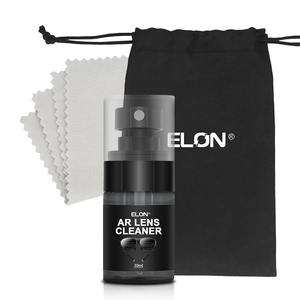
Direct-from-factory solutions engineered for tropical resilience, particulate capture, and lens processing integrity.
Singapore occupies a singular ecological and commercial node in the Asia-Pacific basin. Characterized by high ambient relative humidity (frequently exceeding 80%), ubiquitous tropical temperatures, and instantaneous transitions to high-output HVAC indoor cooling across business districts like Orchard Road, Tanjong Pagar, and Jurong East, optical substrates face severe operational challenges. Lenses immediately suffer from moisture condensation, known as flash fogging. When compounded with high sebum excretion from skin pores in humid atmospheres, standard low-density cleaning cloths fail: they merely smear lipid bilayers across hydrophobic topcoats instead of capturing them.
As an authoritative China optical cleaning cloth supplier & manufacturer dedicated to the Singapore marketplace, we integrate deep chemical and textile engineering into every production run. Rather than treating an optical cloth as an afterthought giveaway, we engineer it as a critical maintenance apparatus that protects multi-layer anti-reflective (AR), anti-static, and blue-light attenuation stacks.
Standard commodity cloths utilize round monofilament spun fibers that push grease particles over the lens surface, precipitating microscopic abrasive scratches (swirl marks). Our optical-grade cloths utilize a conjugate melt-spun 80/20 or 70/30 blend of polybutylene terephthalate / polyethylene terephthalate (PET) and polyamide (PA6) split longitudinally into a wedge-shaped cross-section.
Customized textile weights (180 GSM to 280 GSM) and weave architectures aligned with Singapore's premier optical, enterprise, and industrial workflows.
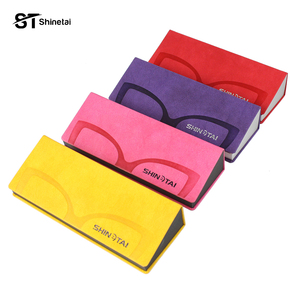
Preserving premium digital free-form lenses and blue-violet filters across retail leaders and clinic dispensaries in Orchard, Bugis, and suburban hubs. Designed to pair with luxury clamshell cases, building long-term practice branding.
Deployments throughout Tuas Industrial Estate and Changi Business Park. Anti-static microfiber wipe configurations suitable for Class 100-10,000 lithography inspection rooms, cleanroom displays, and wafer handling apparatus.
Tailored lint-free cleaning accessories for broadcast operations at Mediapolis, premium DSLR camera repair centers, high-refresh mobile device protection labs, and precision drone gimbal maintenance centers.
Benchmark data for procurement managers balancing unit economics, surface tension resilience, and brand impression longevity.
| Textile Grade | Filament Split Ratio | Surface Density (GSM) | Target Substrate / Application | Optimal Imprint Technique |
|---|---|---|---|---|
| Economy Promotional Microfiber | Unsplit 100% Polyester | 160 - 180 GSM | Basic CR-39 Lenses, Event Giveaways | Single-Color Screen Printing |
| Professional Optical Double-Velvet | 80/20 Wedge Split (PET/PA) | 200 - 230 GSM | AR Lenses, Polycarbonate, Hi-Index | Silicone High-Definition Embossing |
| Suede-Finish Precision Cloth | 70/30 High-Density Matrix | 230 - 260 GSM | Photochromic, Anti-Blue AR Lenses | Full-Bleed Thermal Dye Sublimation |
| Class 100 Cleanroom Micro-Wipe | Continuous Filament Tricot | 250 - 280 GSM | Laser Cavities, Semiconductor Sensor Glass | Laser Debossing (Zero Contamination) |
How forward-looking optometry groups are pivoting their procurement strategies in response to shifting consumer expectations and environmental mandates.
Under Singapore's Green Plan 2030, corporate optometrists and medical clinics are actively migrating to recycled polyester (rPET) derived from post-consumer water bottles. GRS (Global Recycled Standard) certification has become a competitive differentiator in tenders.
Post-pandemic healthcare standards across Singapore clinics require individual hermetic barrier packaging. Dispensers opt for biodegradable translucent glassine envelopes or frosted ziplock sleeves to maintain cleanroom hygiene until handed to the client.
Single-color corner logos are rapidly giving way to high-resolution, full-bleed micro-sublimation featuring localized artwork, botanical prints, and premium branding. The cloth is now treated as an aesthetic keepsake rather than disposable paper.
Combining vertically integrated Chinese weaving and printing lines with responsive international wholesale logistics.
We eliminate speculative batch errors. A high-resolution photograph of the physical, ink-cured production proof is provided for rigorous dimension and color matching before bulk production commences.
By owning warping, weaving, dye-fixation, and cut-and-pack facilities, we eliminate third-party domestic markups, delivering wholesale economies of scale directly to Singapore buyers.
Regular consolidated sea freight (FCL/LCL) directly to PSA Singapore, with expedited 3-5 day air courier options (DHL/FedEx/Air Freight) for urgent product launches and reorders.
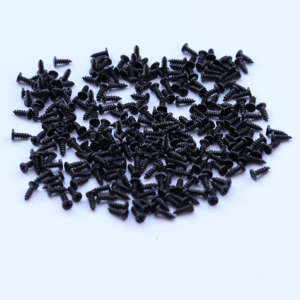
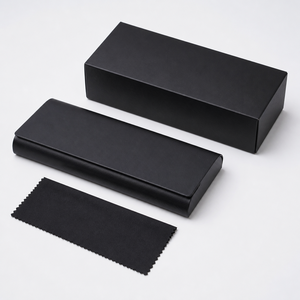
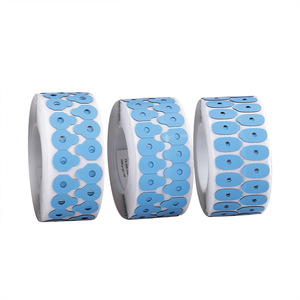
Beyond cleaning textiles, source your entire bench inventory: hard cases, custom lens cleaner solutions, blocking pads, and frame repair screw kits from a unified, verified supply partner.
Clear, direct answers regarding custom branding, minimum order quantities, compliance, and logistics.
Partner with an established China manufacturing leader trusted by premier optical retailers and clinical practices across Singapore and international markets.
Get a Quote