
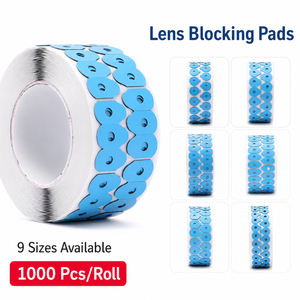
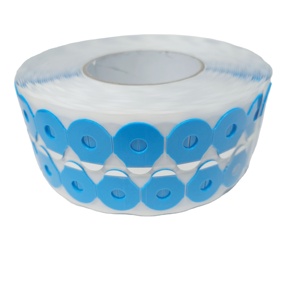
Wholesale Optical Lens Blocking Pads For Lens Edging Optical Cutting Spare Parts Accessory Block Note Pad
- Core: High-density micro-cellular foam
- Machine: Nidek, Essilor, Briot, WECO
- Packaging: 1,000 pcs / dispenser roll
Engineered for computerized edging systems (Nidek, Essilor, Weco, Briot, MEI). Formulated to eliminate axis shift, protect premium anti-reflective stacks, and leave zero adhesive residue under high ambient tropical humidity.
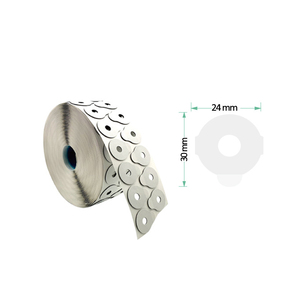
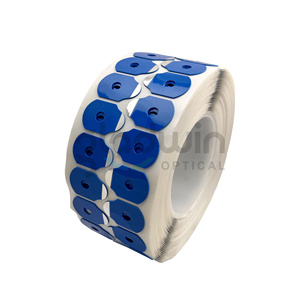
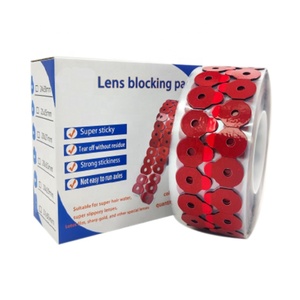
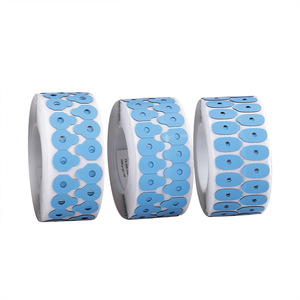
In high-throughput optical finishing facilities throughout the National Capital Region (NCR) of the Philippines—from the commercial optical hubs in Santa Cruz and Quiapo in Manila proper to the centralized wholesale edging labs of Quezon City, Pasig, and Makati—precision edging stability is the single most critical determinant of laboratory yield. As Philippine eye care practices and optical retail chains migrate toward high-index polymers (1.60, 1.67, 1.74), polycarbonates, and specialized Trivex substrates, the tribology of the lens-block interface has shifted dramatically.
Modern lenses are treated with complex vacuum-deposited multi-layer stacks, featuring fluoropolymer-based super-hydrophobic and oleophobic coatings designed to repel water, sweat, and oil. While these surface treatments deliver exceptional clarity and ease of cleaning for patients, they dramatically lower the surface free energy of the lens (frequently below 18 mN/m). When subjected to the high-velocity torsional stress and radial grinding forces exerted by diamond edging wheels running at 5,000+ RPM in computerized CNC edgers, conventional blocking pads encounter catastrophic boundary-layer failure—commonly recognized as axis deviation, lens slippage, or surface shearing.
Furthermore, Metro Manila’s distinct tropical monsoon climate (Köppen climate classification Am) introduces continuous environmental stressors. Laboratories without hermetically sealed, 24/7 climate-controlled finishing bays regularly experience ambient relative humidity (RH) fluctuating between 75% and 88%, coupled with temperatures surpassing 32°C. Elevated humidity compromises standard rubber-based pressure-sensitive adhesives (PSAs), inducing hygroscopic plasticization. This causes the adhesive to soften, lose shear strength, and fail during edging, or conversely, cross-link uncontrollably with the anti-reflective coating, leaving stubborn chemical polymer residues that require aggressive solvent baths and risk coating delamination.
The eyewear landscape across the Philippines has transformed over the past five years. Driven by rapid urban consumer expansion in urban centers such as Bonifacio Global City (BGC), Ortigas Center, and Alabang, regional optical retail chains—alongside independent optometrists—are adopting decentralized or regionalized centralized edging models. Turnaround expectations have collapsed from three days to under forty minutes, placing unprecedented demands on edging precision and block turnaround speed.
Three distinct structural developments are shaping optical consumable procurement across Manila:
From entry-level blue-light blocking lenses to premium digital progressives, slick hydrophobic coatings have become the baseline standard across Philippine clinics. Standard blocking tape fails on these surfaces, demanding specialized cross-linked acrylic blocking pads with high initial tack and zero lateral stretch.
High-volume prescription surfacing laboratories in Caloocan, Quezon City, and Muntinlupa are updating their infrastructure with industrial dry-cut multi-axis CNC machines (such as MEI and Schneider) and high-pressure wet edgers (Nidek ME-1200, Essilor Mr Blue). These units generate immense instant torque requiring high-density closed-cell PE foam cores.
With an active outdoor demographic and significant demand for corrective occupational safety eyewear across maritime, call center, and light assembly sectors, Manila optical practices regularly process steep base curves (6-base to 8-base). These geometries require flexible, highly conformable foam pads that do not lift at the perimeter.
To eliminate optical rejects caused by axis shift, optical laboratory managers must evaluate blocking pads based on quantifiable mechanical properties rather than nominal unit cost alone. The engineering matrix below contrasts standard market-grade EVA blocking tapes against our proprietary industrial-grade cross-linked PE and Hydro-Adhesive formulations designed for high-humidity Philippine processing environments.
| Performance Parameter | Standard EVA Foam Pad | Industrial Cross-Linked PE Pad | Hydro-Adhesive Blue Specialty |
|---|---|---|---|
| Core Substrate | Low-density open EVA foam | Closed-cell cross-linked polyethylene | High-density micro-cellular polyolefin |
| Adhesive Chemistry | Tackified natural rubber | Pure solvent acrylic (differential) | Cross-linked modified fluoro-acrylic |
| Torque Resistance (Nm) | 2.1 Nm (Slip risk on 1.67 index) | 4.8 Nm (Zero slip on high-index) | 5.6 Nm (Maximum safety margin) |
| Peel Adhesion (180° to AR) | < 9.5 N/25mm | 16.5 N/25mm | 21.0 N/25mm |
| 85% RH Stability @ 32°C | Adhesive softens / flows | Stable (<2% variation) | Hydro-impervious |
| Residual Transfer Risk | High (leaves ring on demounting) | Zero (clean cohesive release) | Zero (molecular-clean peel) |
| Machine Compatibility | Standard rimless only | Universal (Essilor, Nidek, Briot) | All High-Torque CNC & MEI Units |
*Data measured under controlled laboratory conditions at 23°C / 50% RH and elevated stress conditions at 35°C / 85% RH simulating Manila unconditioned laboratory transit and edging conditions.
As a specialized manufacturer dedicated exclusively to ophthalmic finishing consumables, our cleanroom manufacturing facility supplies wholesale optical accessory distributors, lens laboratories, and multi-location retail vision brands across Southeast Asia, North America, and Europe. Our operational infrastructure provides the Philippine optical market with dependable, factory-direct manufacturing partnerships.
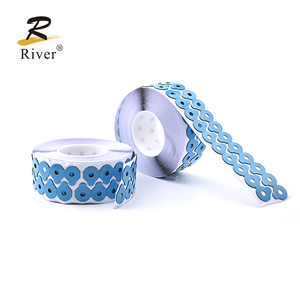
We manufacture over 40 standard die shapes including 24mm round, 18x28mm half-eye, and custom Briot/WECO notches with ±0.05mm tolerance, guaranteeing complete alignment with steel and magnetic blocks.
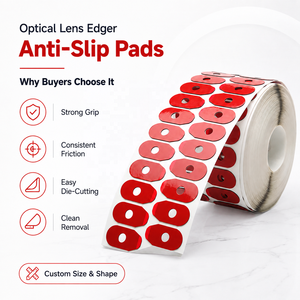
Our proprietary surface coatings eliminate the need for expensive secondary "booster" tapes or anti-slip spray primers, reducing per-job processing costs for high-index progressives by up to 35%.
Consolidated shipments dispatched directly to Ninoy Aquino International Airport (NAIA) air cargo or the Manila International Container Terminal (MICT), supported by complete Form E, Certificate of Origin, and commercial documentation.
From branded tab release liners and bespoke dispenser roll counts (500 pcs, 1,000 pcs, or 2,000 pcs) to custom master carton packing, we offer turnkey OEM manufacturing for domestic optical distributors in the Philippines.
Practical answers addressing common adhesive, logistics, and process control questions encountered by lab supervisors and purchasing directors across Metro Manila.
Our hydrophobic anti-slip pads utilize a dual-component engineering approach: a firm, high-density closed-cell polyolefin foam core that will not shear or distort under rotational torque, paired with a modified acrylic adhesive featuring high tack and specific chemical affinity for fluorinated coatings. The adhesive grips the slick fluoropolymer layer without requiring secondary liquid gripping agents or auxiliary non-slip overlays, maintaining axis alignment within ±0.25° even during aggressive roughing wheel passes.
No. Standard low-cost pads often use tackified rubber adhesives that soften and flow when exposed to relative humidity exceeding 75%. Our pads are synthesized using moisture-cured, cross-linked solvent acrylics that are hydro-inert. To safeguard long-term warehouse storage, all pads destined for the Philippines are vacuum-sealed in multi-layer foil-barrier rolls with silica desiccant, preserving full factory shelf stability for 24 months in tropical warehouse conditions.
Yes. We produce precision die-cut profiles matching every major block specification used across Philippine laboratories. Whether you are using Nidek half-eye 18mm blocks, Essilor Gamma/Kappa/Mr Blue oval blocks, Santinelli, Briot, or WECO keyway systems, our die lines feature clean-punched block-locating holes and finger-lift release tabs for quick positioning and rapid deblocking without operator fatigue.
Adhesive transfer occurs when the internal cohesive strength of the adhesive film is weaker than its mechanical adhesion to the lens substrate. Our formulations feature a cross-linking polymer network with exceptionally high internal cohesive strength. When the technician removes the block, the adhesive releases cleanly from the optical surface in one continuous piece, leaving zero polymer residue, ghost rings, or hazy spots, and removing the need for post-edging chemical solvent wipe-downs.
For standard stocked sizes (including 24mm round and 24x30mm oval), dispatch from our factory occurs within 24 to 48 hours. For urgent orders dispatched to Metro Manila via express air freight (DHL, FedEx, or air cargo to NAIA), transit time is typically 3 to 5 business days. For full pallet or full container-load (FCL) wholesale stock, sea freight directly to the Port of Manila (MICP) typically takes 10 to 14 days port-to-port, backed by comprehensive import-ready commercial documentation.
Yes. We offer complete OEM and ODM engineering services. Philippine distributors and large optical groups can specify custom foam thicknesses (0.6mm, 0.8mm, 1.0mm), personalized liner printing with your enterprise brand, custom color combinations (blue, clear, dark grey), and bespoke roll quantities tailored directly to your local distribution channels.
Eliminate slippage rejects, protect premium lens coatings, and partner directly with an established manufacturer committed to supporting the Philippine ophthalmic industry. Request free lab sample packs and wholesale volume pricing now.