
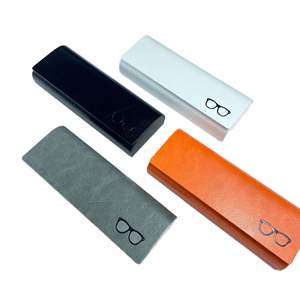
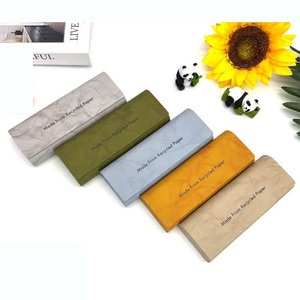
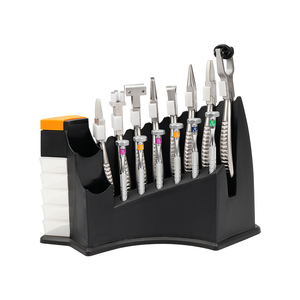
From coating-safe lens formulas to robust physical protection and bench equipment, our manufacturing runs adhere to strict optical-grade tolerances.
Surface fogging is not merely an aesthetic nuisance; it represents an optical phase disruption. When warm, humid air contacts a colder optical substrate, the water vapour undergoes rapid thermal equilibrium, condensing into microscopic liquid droplets. In untreated conditions, these dispersed micro-droplets act as microscopic hemispherical lenses. Through Mie and Rayleigh scattering mechanisms, incoming light rays are refracted randomly, inducing high opacity, visual distortion, and safety hazards across medical, industrial, and athletic environments.
Modern professional anti fog spray manufacturers solve this surface energy conflict through one of two scientific pathways: superhydrophilic planar leveling or fluorinated hydrophobic moisture barrier displacement. High-performance optical sprays rely predominantly on superhydrophilic amphiphilic surfactants. When applied via micro-mist atomizers, these specialized compounds lower the contact angle (θ) of moisture droplets from an average of 65°–80° down to under 5°. Consequently, incoming condensation cannot coalesce into spherical light-scattering droplets. Instead, it instantly flattens into an ultra-thin, continuous, transparent aqueous film across the substrate surface, allowing undisturbed specular light transmission exceeding 98.5%.
A critical consideration for wholesale procurement officers and optical dispensing laboratories is compatibility with delicate thin-film coatings. Standard consumer solvents often leverage high concentrations of isopropyl alcohol, aggressive glycol ethers, or ionic detergents that rapidly strip broadband anti-reflective (AR) metal-oxide stacks, premium hydrophobic top-coats, and vacuum-deposited blue-light attenuation layers. Top Flight Canada's manufacturing protocol utilizes high-purity, neutral pH (6.8–7.2), non-alcoholic surfactant matrices specifically engineered to leave zero micro-scratches, haze, or chemical striations on polycarbonate, CR-39, high-index 1.67/1.74 polymers, and specialized glass substrates.
Global supply chains for optical surface treatments and preventive lens sprays are undergoing structural shifts driven by tighter environmental regulations, brand personalization demands, and automated retail integration.
Regulatory bodies (including Health Canada, US EPA, and EU REACH) are strictly phasing out per- and polyfluoroalkyl substances (PFAS). Leading manufacturers have successfully transitioned to plant-derived non-ionic surfactants, polysorbate-stabilized siloxanes, and biodegradable polymers that deliver equivalent 72-hour moisture displacement without ecological persistence or toxicity liabilities.
B2B buyers are consolidating line items. Purchasing managers no longer purchase standalone degreasers and independent anti-fog agents. Current dispensing trends heavily favor single-step colloidal suspensions that lift facial sebum and airborne particulates while simultaneously electrostatically cross-linking a non-migrating hydrophilic barrier to the substrate in a single wipe.
Modern optical retail chains and multi-location optometry clinics are eliminating generic distributor bottles from their counters. Anti-fog sprays, accompanied by branded ultra-fine microfiber cloths and tailored cases, represent high-margin recurring touchpoints. Practices leverage custom Pantone-matched solutions, tactile labels, and customized volumes to elevate brand equity and retention.
Evaluating commercial-grade formulations against physical atmospheric triggers is critical when establishing long-term vendor agreements. The table below outlines how next-generation surface treatments compare with legacy sprays.
| Evaluation Parameter | Legacy Alcohol/Solvent Sprays | Modern Surfactant Systems (Top Flight Standard) | Advanced Nanocoating Matrix |
|---|---|---|---|
| Dynamic Water Contact Angle | 25° – 35° (Residual Beading) | < 5° (Immediate Sheet Layering) | < 3° (Instantaneous Wetting) |
| Coating Safety (AR & Blue Blocker) | High Risk (Delamination / Crazing) | 100% Non-Reactive & Safe | 100% Non-Reactive & Safe |
| Effective Active Duration | 4 – 8 Hours | 48 – 72 Hours per Application | Up to 120 Hours (High Mechanical Resistance) |
| Optical Haze / Streaking Index | Noticeable Residue (> 1.8% Haze) | Streak-Free Optical Clarity (< 0.2% Haze) | Imperceptible Micro-film (< 0.1% Haze) |
| Thermal Shock Shift (-10°C to +25°C) | Instant Condensation Fog | Zero Condensation Occlusion | Zero Condensation Occlusion |
Research and development in surface chemistry currently center around self-assembling polymer brushes and photo-catalytically activated nanosilica complexes. These platforms form covalent chemical anchoring sites on polymer lenses without damaging the substrate. For high-volume manufacturing facilities, integrating these stabilized surfactant matrices into consistent 125 ml fine-droplet pumps ensures uniform spray dispersion patterns, avoiding concentrated droplet spots that degrade visual acuity.
Headquartered in Vaughan, Ontario, Top Flight Canada merges extensive manufacturing expertise with centralized domestic warehousing to deliver unparalleled supply chain security across North America.
Located at 311 Bowes Rd, Unit B2, Vaughan, ON. We manage our own inventory on-site, totally eliminating drop-shipping delays, unpredictable offshore transit risks, and cross-border customs surprises.
We supply independent optical clinics, large ophthalmic networks, and optometry groups seamlessly across all 13 Canadian provinces and territories with consolidated, rapid fulfillment.
Zero unexpected surprises. For every pad-printed eyeglass case, screen-printed microfiber cloth, or private-labeled spray bottle, we provide high-resolution physical proof photography prior to full batch production.
Real optical consultants support your procurement pipeline. We provide inventory confirmations, pricing matrices, and tailored portal setups within 24 business hours.
Key operational, regulatory, and chemical guidance addressing frequent questions raised by wholesale buyers and practice managers.
Yes. Our proprietary 125 ml spray solutions are engineered specifically with neutral pH surfactants without harsh solvents, ammonia, or abrasive additives. They are guaranteed 100% safe on anti-reflective (AR), hydrophobic, oleophobic, mirror, and blue light filtering coatings without inducing crazing or surface delamination.
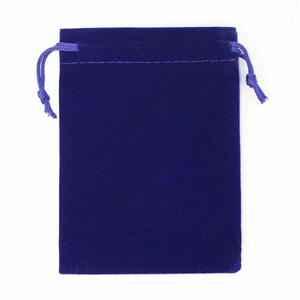
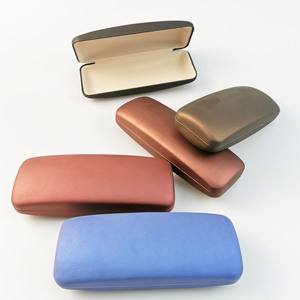
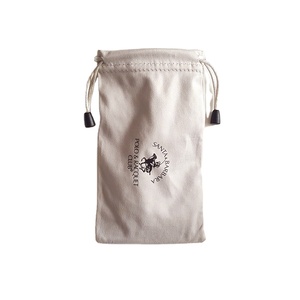
We execute precision pad printing on metal and hard PU eyeglass cases to accommodate contoured geometry, screen printing on microfiber cloths and drawstring velvet pouches, and photographic full-color waterproof label printing on our 125 ml lens cleaner spray bottles.
Unlike suppliers who rely exclusively on digital mockups, our manufacturing standard mandates that a physical production sample is printed and photographed. We submit detailed, high-resolution proof photos for your formal approval prior to initiating the complete manufacturing run.
Because stock is maintained at our Vaughan, Ontario distribution facility, unprinted accessories and standard cleaners ship within 24 to 48 hours. Custom-printed cases, cloths, and private-label sprays feature accessible minimum order quantities tailored to independent optometry clinics as well as high-volume retail groups.
Our core physical distribution network is purposefully scaled around Canadian optical retail and clinical chains. However, we regularly accommodate corporate orders, custom OEM production runs, and multi-national private label programs upon initial consultation with our international accounts team.
Optical stores, optometrists, and healthcare providers can submit an inquiry with business credentials. Our sales team verifies and establishes your partner portal access within one business day, enabling seamless online ordering, bulk discounting, and rapid repeat dispatches.