Explore our precision-engineered eyewear retainers, custom straps, microfibre maintenance solutions, and professional optical assembly tools built for international B2B distributors and eye care chains.
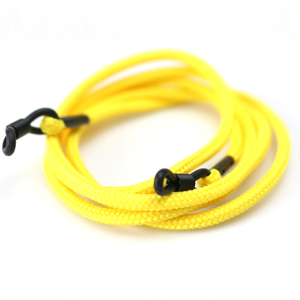
In the high-velocity optical accessories sector, selecting a primary tier-1 manufacturing partner for eyewear retainer straps requires an understanding that goes beyond simple price-per-unit metrics. Premium eyewear retainers represent a vital intersection between ergonomic industrial design, bio-compatible material science, and high-frequency tactile durability. Whether your organization is supplying activewear brands, tactical military eyewear channels, pediatric eye clinics, or global retail chains, sourcing directly from verified Chinese manufacturers provides a decisive cost-to-quality advantage.
This comprehensive B2B procurement whitepaper provides global supply chain managers, product developers, and wholesale buyers with the exact technical benchmarks, structural material evaluation criteria, and compliance protocols necessary to establish a robust OEM/ODM manufacturing pipeline in China.
Key Takeaway for B2B Procurement Officers: A high-performance eyewear retainer strap must solve three critical engineering challenges: maintaining non-slip mechanical tension under extreme sweat/seawater conditions, eliminating skin abrasion during prolonged contact, and preventing micro-fractures in the elastomeric temple connector ends over repeated insertion cycles.
The operational reliability of an eyewear strap depends primarily on its foundational substrate and terminal connector technology. China’s leading retainer strap factories utilize four primary material ecosystems, each tailored for specific commercial applications and environmental stress parameters:
Closed-cell synthetic rubber laminated with fast-drying nylon or polyester jersey knit. Provides native water buoyancy, ideal for marine, watersports, and offshore industrial safety applications. Resists salt degradation and UV breakdown.
Precision compression-molded or injection-molded 100% medical-grade silicone. Completely hypoallergenic, biological-fluid resistant, non-porous, and capable of maintaining elasticity from -40°C to +200°C. Ideal for clinical, pediatric, and extreme heat environments.
High-tenacity multi-filament polyester yarn tightly woven around a flexible elastomeric core. Offers high aesthetic versatility, pantone color matching, sublimation printing capability, and lightweight everyday wearability for fashion-forward optical lines.
Aircraft-grade 304/316 stainless steel wire wrapped in an invisible UV-stabilized clear polymer sleeve. Completely off-the-neck ergonomic design that maintains shape without touching skin, preferred for tactical and heavy-duty active sports wear.
| Material Category | Tensile Strength (kgf) | Water / Sweat Resistance | Hypoallergenic Grade | Custom Branding Method | Typical MOQs |
|---|---|---|---|---|---|
| High-Density Neoprene | 12.5 - 18.0 kgf | Excellent (Buoyant) | Standard Grade | Silk Screen / Heat Transfer | 1,000 Pcs |
| Medical Grade Silicone | 8.0 - 14.0 kgf | Impervious | Medical / Food Grade | Debossed / Embossed Mold | 2,000 Pcs |
| Woven Polyester Cord | 20.0 - 35.0 kgf | Moderate (Fast Dry) | Standard Grade | Jacquard Weave / Sublimation | 1,000 Pcs |
| Coated Steel Cable | > 40.0 kgf | Impervious (Corrosion-proof) | High Grade Sleeve | Laser Etched Crimp Ends | 500 Pcs |
Sourcing directly from tier-1 specialized factories in Guangdong and Zhejiang provinces enables brand owners and distributors to achieve strict quality control while retaining maximum margin flexibility. By controlling the production sequence from raw polymer compounding to high-frequency ultrasonic welding, premier Chinese suppliers offer key competitive advantages:
Eliminate mass manufacturing errors with pre-production physical samples. Factories perform precise Pantone matching (PMS), logo alignment verification, and stress testing, transmitting physical samples or ultra-high-resolution photographic proofing before mass production commences.
Every accessory, from retainer clips to microfibre cleaning cloths and soft spray solutions, is tested to be 100% non-abrasive and chemically inert. Products will never strip sensitive anti-reflective (AR), hydrophobic, or blue-light blocking lens coatings during daily operation.
Equipped with automated cycling pull-testers, high-end production lines subject elastomeric temple ends to 10,000+ insertion and extraction cycles. This guarantees that temple connectors retain continuous elastic recovery without permanent deformation or tearing.
As the global market for active lifestyle accessories, outdoor tactical gear, and pediatric eyewear continues to expand, procurement leaders must anticipate key technology shifts occurring within Chinese manufacturing hubs between 2026 and 2030:
International environmental mandates and corporate ESG standards are driving rapid adoption of sustainable raw materials. Leading Chinese factories are now spinning GRS-certified (Global Recycled Standard) recycled PET yarn derived from ocean-bound plastics. Simultaneously, bio-based liquid silicone rubber synthesized from renewable plant-derived silica is replacing petroleum-based silicone, enabling brands to market carbon-neutral optical lines.
Legacy bulky neoprene retainers are rapidly being superseded by ultra-thin, low-profile designs that integrate smoothly with bicycle helmets, tactical headgear, and noise-canceling headsets. Flexible micro-cable construction and flush-mounted sonic welding allow retainers to lie completely flat against the temporal bone, eliminating pressure points during extended wear.
For industrial safety channels and night-running athletic segments, manufacturers are integrating micro-glass bead retro-reflective yarns and non-toxic phosphorescent pigments directly into the braided cord structure. This provides passive 360-degree illumination in low-light environments without compromising the softness or tactile flexibility of the strap.
A persistent bottleneck in retail inventory management has been the wide variance in frame temple widths—ranging from thin wire-rims (2mm) to thick sports eyewear stems (15mm+). Emerging Chinese retainer designs feature dual-injection molded silicone tips with variable inner friction ribs, allowing a single SKU to grip both micro-wire frames and wide acetate temples without slippage.
Direct answers to common technical, logistics, and quality assurance inquiries encountered by international B2B buyers when purchasing eyewear retainers from China.
For standard stock colors with custom screen-printed or pad-printed logos, the typical MOQ starts at 1,000 units per style. For custom-dyed Pantone cord colors, specialized jacquard weaving, or custom-molded silicone end-tips requiring new tooling, the standard production MOQ is generally 2,000 to 5,000 units depending on material complexity.
Tier-1 factories maintain strategic partnerships with accredited third-party testing labs such as SGS, TÜV Rheinland, and Intertek. Raw material batches (silicone, neoprene, dyes, and printing inks) undergo chemical analysis to verify that phthalates, heavy metals (lead, cadmium), polycyclic aromatic hydrocarbons (PAHs), and azo dyes remain strictly below mandatory regulatory limits.
Yes, absolutely. Physical pre-production sample approval is a standard quality protocol. Once artwork vectors and technical specifications are finalized, sample creation takes approximately 3 to 7 business days. Mass production only proceeds after the buyer physically inspects and approves the sample proof or signs off on high-resolution laboratory proof images.
For high-density neoprene, silk screen printing with flexible elastomeric inks or heat-transfer sublimation is recommended. For silicone materials, high-temperature debossing, embossing, or vulcanized silicone ink printing ensures the logo does not peel. For woven cord retainers, high-definition Jacquard weaving or laser-engraved aluminum cinch beads offer permanent, wear-resistant branding.
Standard manufacturing lead time is 15 to 25 calendar days following pre-production sample sign-off. Logistics solutions include door-to-door express courier (4–7 days) for high-urgency inventory replenishment, air freight (7–10 days), and ocean freight or rail freight (20–35 days) for large-volume container shipments.
Streamline your optical accessory supply chain with direct factory pricing, certified material quality, and dedicated engineering support. Request your custom OEM/ODM quotation today.
Get a Quote