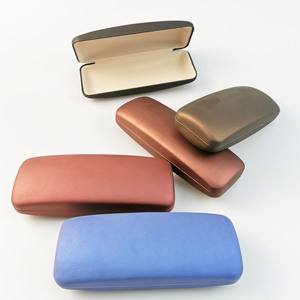
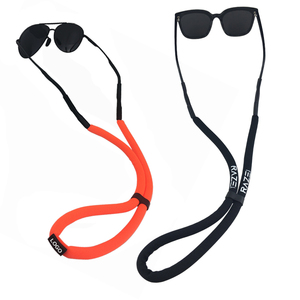
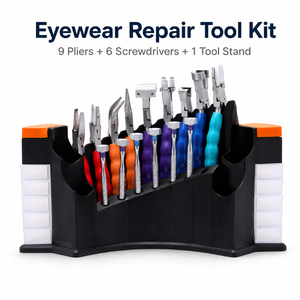
From micro-screw extraction and torque adjustment to lens-care kits and protective enclosures, discover certified hardware engineered for high-volume lab assembly and dispensing counters.
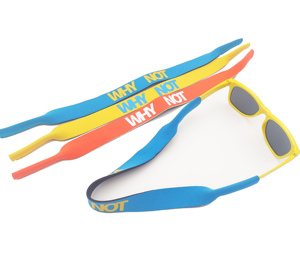
In optical manufacturing, an eyeglass frame is only as durable as its most dynamic mechanical component: the hinge. Whether joining a hand-carved Italian Mazzucchelli acetate front to a wire core temple, or anchoring high-index prescription lenses within an ultralight rimless titanium chassis, the hinge assembly absorbs repetitive lateral forces, torsional flexure, and environmental corrosion. For optical brands, lab technicians, and retail optometrists, hinge failure is the single leading driver of frame returns, post-dispensing alignment complaints, and brand dissatisfaction.
Historically viewed as a commoditized piece of bent wire or cast alloy, the modern eyeglass hinge has transformed into a high-precision sub-assembly. Contemporary optical frames rely on tightly calibrated metallurgical compositions—ranging from lead-free German Silver (CuNi18Zn20 cupronickel) and surgical-grade AISI 316L stainless steel to shape-memory Beta-Titanium (Ti-15V-3Cr-3Sn-3Al). Choosing the optimal hinge configuration requires a rigorous evaluation of barrel tolerances, friction coefficient dampening, screw retaining systems, and ultrasonic insert performance.
Industrial optical engineers categorize hinges according to their mechanical actuation, mounting methodology, and kinematic degrees of freedom:
| Hinge Architecture | Typical Kinematics | Dominant Materials | Target Frame Category | Fatigue Threshold |
|---|---|---|---|---|
| 3-Barrel Traditional | Fixed 95°–100° rotational arc | Cupronickel / SS 304 | Thin acetate, entry-level readers, metals | 8,000 – 12,000 cycles |
| 5-Barrel & 7-Barrel Monobloc | High-torsion interlocking comb | AISI 316L / German Silver | Heavy acetate, bespoke luxury sunwear | 18,000 – 25,000 cycles |
| Integrated Spring Hinge (Flex) | 100° base + 15°–25° sprung deflection | Nickel-Free Brass / BeCu Springs | Commercial optical dispensing, everyday wear | 20,000 – 30,000 cycles |
| Screwless Friction Clasp | Geometric interlock / leaf spring flexure | Beta-Titanium / Sandvik Steel | Minimalist luxury, rimless, active sports | 35,000 – 50,000 cycles |
| Ultrasonic / Heat-Staked Rivet | Embedded anchor plate with double pin | CuNi12Zn24 Alloy | Bio-cellulose acetate, horn, molded propionate | 15,000 – 20,000 cycles |
Evaluating the premier global suppliers of eyeglass hinges and specialized optical mounting hardware requires analyzing manufacturing tolerances, metallurgical stability, toolmaking capability, and international export logistics. Below is the definitive ranking of leading suppliers servicing optical brands across North America, Europe, and Asia-Pacific.
The unquestioned gold standard in mechanical precision, OBE engineers the industry-defining "Flex Uno" and "Pro-Fit" spring hinges, backed by patented micro-screw retention technology.
Combining Italian micro-engineering design with massive Asian manufacturing capacity, Visottica produces complex 5-barrel systems, composite titanium hinges, and precision micrometric joints.
Renowned for cold-heading technology and robotic stamping, Redtenbacher supplies proprietary snap-action spring mechanisms that withstand rigorous long-term flex cycles.
A specialist in CNC micro-milling and precision progressive stamping dies, Chun Mao provides tight-tolerance titanium and stainless steel barrel hinges for boutique designer labels.
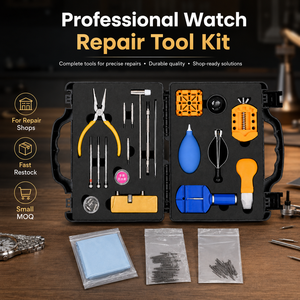
Operating a centralized fulfillment hub in Vaughan, ON, Top Flight Canada anchors North American optical labs with curated, lab-inspected repair kits, screw assortments, cases, and bench tools.
Positioned at the epicenter of Chinese optical production, RongHao produces vast volumes of nickel-silver and stainless steel 3-barrel and spring hinges for competitive mass-market collections.
Originating in Japan's legendary eyewear capital, Fukui specializes in artisanal hand-finished 7-barrel hinges and seamless rivet pinning systems built exclusively for ultra-premium collections.
Hailing from the French Jura optical cluster, B&M creates custom-engineered micro-mechanisms, spring-loaded hidden chassis, and screwless friction latches for European heritage houses.
One of China's largest direct exporters of optical components, Feida specializes in ultrasonic insert hinges, soldered bridge joints, and bulk replacement temple springs for global distributors.
A vertically integrated manufacturing and export titan, Sun Hing delivers turnkey OEM/ODM hinge modules, specialized PVD-coated surface finishes, and smart-eyewear conduit hinge joints that meet strict international consumer electronics and biocompatibility mandates.
The optical hardware industry is undergoing its most radical transformation since the introduction of the internal spring box in the 1980s. Optical procurement teams must anticipate four macro technological shifts reshaping how hinges are sourced, mounted, and maintained:
Next-gen hinges incorporate micro hollow-core pivots and flexible FPC ribbon cable channels, allowing data and power transmission between temple batteries and front-frame HUD optics without structural fatigue.
Eliminating micro-screws entirely, laser-sintered titanium clip hinges and polyether ether ketone (PEEK) friction sleeves remove the risk of stripped threads and back-out failures during patient usage.
Selective Laser Melting (SLM) enables hinges to be printed directly as an indivisible monolithic unit of the frame front and temple, removing brazing points and weak solder seams entirely.
Strict European RoHS and REACH directives are accelerating the adoption of certified 100% recycled stainless steel and lead-free non-allergenic copper alloys to support circular eyewear lifecycles.
Headquartered at 311 Bowes Rd, Unit B2, Vaughan, Ontario, Top Flight Canada bridges the gap between global precision manufacturing and local optical dispensing realities.
Eliminate unpredictable 60-day maritime shipping backlogs. Our Vaughan distribution warehouse maintains comprehensive rolling stock of optical accessories, bench repair tooling, and replacement screws.
Never deal with misprinted cases, off-color microfibre cloths, or inaccurate branding. We produce, photograph, and submit physical proof approvals before starting custom runs.
From downtown optometry flagships in Toronto and Vancouver to remote clinics across the northern territories, we deliver reliable B2B shipping schedules with transparent CAD invoicing.
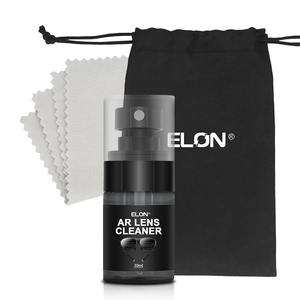
We do not sell generic promotional trinkets. Every lens spray formula is tested for AR-coating integrity, every cloth is checked for zero-abrasion micro-fibers, and every tool is optometry-rated.
Key questions frequently asked by optical lab managers, sourcing directors, and dispensing practice owners when evaluating eyeglass hinges and frame components:
Screw loosening is prevented through three distinct engineering techniques: utilizing micro-encapsulated anaerobic threadlockers (such as Nylok Blue Torq-Strip), opting for counter-sunk self-guiding thread geometries (like OBE Uno screws), or deploying Teflon-sleeved spring barrels that dampen cyclic vibrational torque during temple opening.
In compliance with European standard EN 1811 (nickel release rate < 0.5 μg/cm²/week for direct and prolonged skin contact), hinges must either be manufactured from pure Grade 2 / Grade 5 Titanium, AISI 316L surgical stainless steel, or coated with an inert PVD/galvanic barrier coat that passes 48-hour artificial sweat testing.
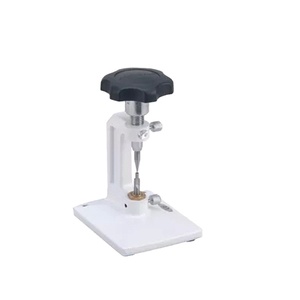
Yes. By using specialized optical screw extractors (such as the hardened-tooling extractor featured in our bench toolkit) paired with precision parallel-action optical pliers, broken shanks can be reverse-threaded cleanly without applying heat or lateral stress to the internal acetate core wire.
A 5-barrel hinge increases the lateral shear contact surface area by approximately 66% compared to a 3-barrel joint. This distributes mechanical tension over multiple interlocked combs, preventing temple wobble when mounting heavier polarized or high-base curve glass lenses.
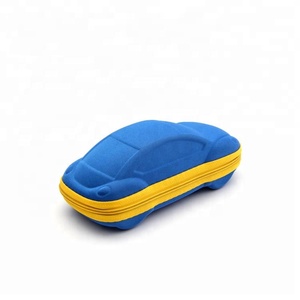
While foreign hardware factories frequently require 10,000+ unit minimums for customized components, Top Flight Canada accommodates boutique clinics and regional optical groups with accessible MOQs on pad-printed cases, custom-formulated lens cleaner spray bottles, and screen-printed microfibre cloths.
Inferior lens cleaners containing harsh alcohols or volatile organic solvents can strip protective lubricants from inside spring hinge boxes and craze premium multi-layer anti-reflective (AR) coatings. Our 125 ml spray cleaner formula is strictly pH-neutral, streak-free, and safe for all coated optics and hinge alloys.