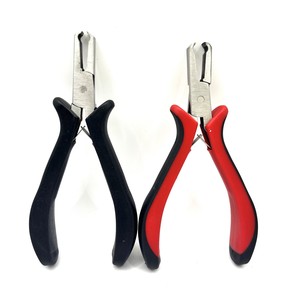
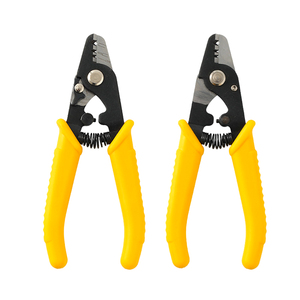
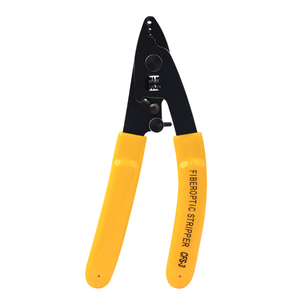
Source high-torque, non-scratching frame adjustment pliers, stainless steel optician kits, and multi-stage telecom optical wire preparation hand tools crafted for heavy daily optical bench work.
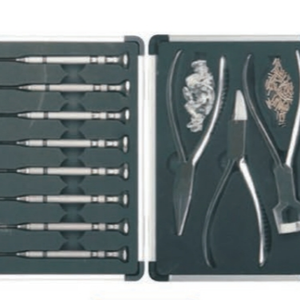
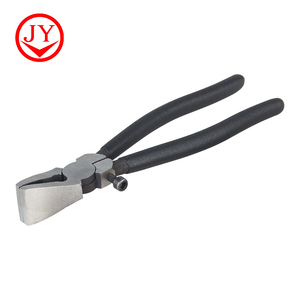
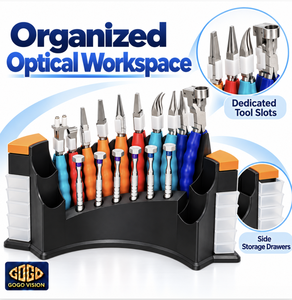
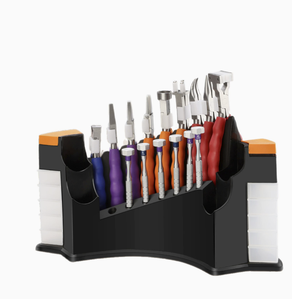
Access factory-direct volume tier pricing, custom laser-etched branding, and complete precision sample sets before running bulk export orders. Our engineering desk provides instant feasibility turnarounds.
Get CatalogWhy ordinary hardware pliers fail at the dispensing counter: An in-depth analysis of surgical martensitic steels, fulcrum mechanical advantage, and anti-marring jaw geometry required for high-end optical labs.
Optical pliers undergo continuous cyclic loading and direct contact with acidic human skin oils and ultrasonic sanitization chemicals. Ordinary carbon steels oxidize and corrode, while common austenitic 304 steels lack edge-retention hardness. Our optical pliers utilize cold-forged 420J2 and 440C martensitic stainless steels, vacuum heat-treated to an optimal 54-58 HRC. This achieves the ideal metallurgical ratio between surface hardness and structural ductility, mitigating jaw fracture during heavy temple curving.
Modern luxury eyewear utilizes brittle anti-reflective coated polycarbonate lenses, Beta-Titanium memory alloys, and hand-polished Italian cellulose acetate. Direct metal contact leaves gouges and stresses AR matrixes. We integrate replaceable high-density POM (polyoxymethylene) and silicone-infused thermoplastic elastomer jaw liners. These engineered contact pads deform elastomeric pressure across 4.2x greater surface area, ensuring safe hinge angling without coating fractures.
Scissor-jaw play is the primary cause of screw-head stripping and misaligned eyewire bevels. Standard stamped box joints loosen after fewer than 1,000 cycles. Our factory employs Swiss 5-axis computer-controlled wire electrical discharge machining (EDM) on lap-joint assemblies. By keeping joint gap tolerances within ±0.02 mm, opticians experience continuous linear compression along the entire length of the jaw, eliminating wobble when seating titanium rimless compression bushings.
Evaluate exact manufacturing specifications to eliminate substandard tool returns and elevate lab dispensing efficiency.
| Functional Specification | OEM Optical Grade Pliers | Standard Industrial Hardware Pliers | Optical Dispensing Impact |
|---|---|---|---|
| Base Metallurgy | Forged 420J2/440C Martensitic Stainless | Drop-Forged High Carbon C45 Steel | Resists ultrasonic enzymatic baths without rust pitting |
| Rockwell Hardness (HRC) | 54 – 58 HRC (Tempered Core) | 44 – 48 HRC (Induction Hardened) | Zero jaw deformation when bending high-temper Beta-Titanium |
| Pivot Pin Tolerance | ±0.015 mm Lap Joint with Teflon Washer | ±0.150 mm Stamped Riveted Lap | Prevents jaw twisting that shears fragile rimless screws |
| Contact Surface Liners | UV-Stabilized Replaceable POM / Nylon | Bare Knurled or Serrated Carbon Steel | Protects precious PVD gold and electroplated titanium finishes |
| Surface Finish Chemistry | Micro-Glass Bead Blasted Matte / Passivated | Galvanized Chrome or Nickel Dip | Zero glare under intense optometric examination lighting |
| Ergonomic Fatigue Rating | Contoured Soft Santoprene (Anti-Fatigue) | Dipped Hard PVC or Bare Steel | Minimizes repetitive strain injuries for lab technicians |
Anticipate where ophthalmic frame tooling and precision optical handpieces are headed over the next five years to keep wholesale catalog inventory commercially competitive.
The rise of customized luxury acetate and high-index ultra-thin lenses has rendered single-function pliers obsolete. The upcoming generation of optical pliers incorporates magnetic or set-pin modular jaws, allowing opticians to swap from curved nylon bridge shaping to knurled pad-arm holding heads in seconds, reducing bench footprint by 60%.
Lab technicians perform hundreds of frame adjustments daily. Forward-thinking manufacturers are transitioning body forgings to aerospace Grade 5 Titanium (Ti-6Al-4V) with tool steel inserts. This configuration decreases tool weight by 45% while preserving extreme torsional stiffness required for pantoscopic tilt adjustments.
Traditional chrome finishes peel and micro-flake under clinical chemical sterilization. Next-generation production integrates physical vapor deposition (PVD) titanium nitride and diamond-like carbon (DLC) coatings. These inert layers yield superior biocompatibility, reduce friction coefficients, and ensure absolute surface integrity in cleanrooms.
As 3D-printed polyamide frames and ultra-brittle magnesium-aluminum alloys gain market share, manual over-crimping creates expensive warranty claims. Advanced optical pliers now integrate miniaturized internal ball-detent slip mechanisms that limit applied torque to precise thresholds, protecting delicate eyewear structures.
How international optometry groups and optical distributors are streamlining supplier selection, compliance standards, and risk mitigation across Asian supply chains.
Rather than managing disconnected vendors for pliers, frame screwdrivers, replacement pads, and microfiber textiles, leading retail chains are turning to single-source optical equipment manufacturers. Purchasing integrated bench sets cuts administrative freight overhead, harmonizes quality inspection protocols, and simplifies inventory forecasting across regional distribution hubs.
To eliminate misaligned laser engraving and incorrect jaw specifications before mass assembly, modern B2B sourcing demands mandatory pre-production physical proofing. High-resolution photographic proofs, combined with metallurgic hardness test reports, must be validated before large volume export containers are dispatched from Chinese manufacturing facilities.
Regulatory frameworks across Europe and North America demand that technician-facing and patient-adjacent tools comply with RoHS and REACH regulations. Heavy metals like lead or hexavalent chromium in electroplating are rejected at customs. Tier-1 wholesale suppliers ensure all rubber grips and metal passivation treatments pass verified toxicological testing.
Precision craftsmanship meets modern industrial volume: A dedicated optical tooling manufacturing ecosystem engineered for global supply contracts.
Unlike general hardware workshops that produce pliers alongside household wrenches, our facility specializes in ophthalmic handpieces, frame assembly tools, and precision micro-strippers. Every bevel, jaw radius, and spring resistance is engineered around eyewear geometries.
Every single pair of pliers is hand-checked by experienced optical bench technicians prior to final packaging. We test jaw closure uniformity against backlit calibration gauges, verifying zero parallel light transmission and smooth spring action.
We provide full private-label services, including high-contrast fiber laser etching for brand names, part numbers, and functional markings. In addition, we offer customized molded handles in your brand's Pantone color palette and branded retail packaging.
We facilitate streamlined purchasing for multi-clinic optical groups by supporting trial batch orders. Rapid sampling ensures your optometry team evaluates ergonomic balance, jaw hardness, and spring resistance before running bulk production containers.
Clear answers to critical technical, customization, and logistical questions asked by global optical supply chain managers.
Partner directly with China's precision optical hand tool manufacturer. Review full metallurgical datasheets, factory pricing tiers, and customized tooling solutions tailored to your retail chain or lab distribution brand.
Get Catalog