Choosing among custom printed eyeglass cases involves more than matching colors with a brand logo. The best cases protect lenses, feel comfortable in the hand, and remain attractive after repeated daily use. A case that looks impressive but bends under light pressure has missed its main purpose.
Dr. Justin Bazan, OD, an optometrist and eyewear industry consultant, offers a practical reminder: “A case should protect the glasses without becoming a burden to carry.” That principle guides this review of custom printed eyeglass cases. We will examine shell strength, hinge quality, soft lining, closure security, and print durability. Small details matter. A smooth microfiber interior can reduce lens scratches. A firm clasp can prevent accidental openings inside a handbag. Accurate sizing also matters, especially for oversized frames or sunglasses.
Printing creates another layer of quality. Sharp artwork, balanced colors, and scratch-resistant finishes can make a case feel genuinely professional. Yet no option is perfect. Some hard cases protect better but occupy more space. Some slim designs travel easily but offer less impact resistance. That trade-off deserves honest attention.
This guide compares leading case styles for optical shops, corporate gifts, events, and everyday customers. It also considers material choices, practical customization limits, and long-term value. The goal is not to praise the loudest design. It is to identify the cases that protect eyewear reliably while representing a brand clearly.
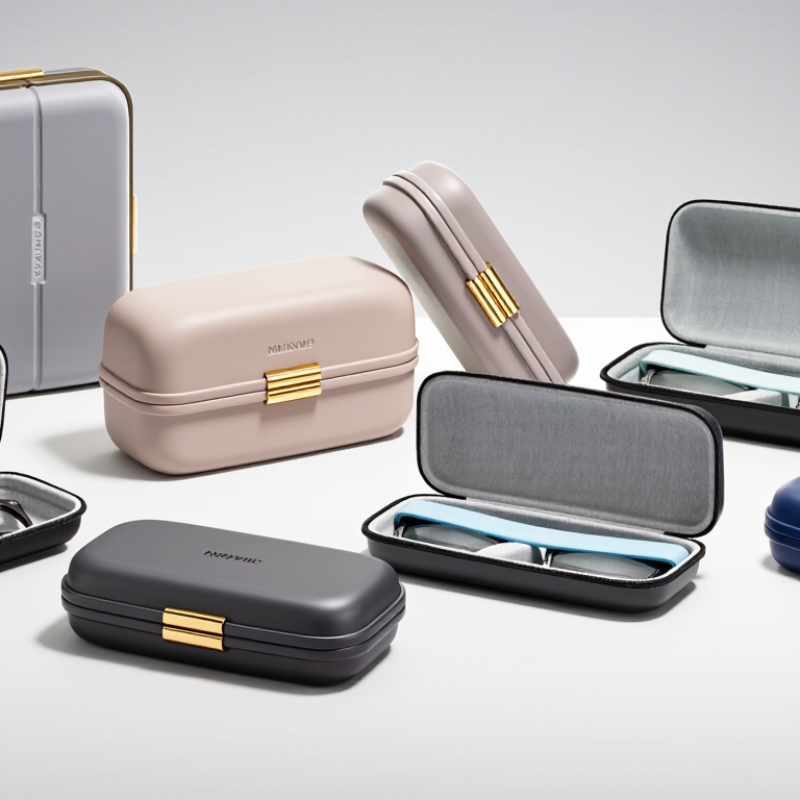
Custom printed eyeglass cases are protective holders decorated with a chosen logo, pattern, message, or personal design. They protect prescription glasses and sunglasses from scratches, dust, and pressure inside a bag. Common options include hard-shell cases, soft pouches, recycled fabric cases, and molded plastic designs.
The need is significant. The World Health Organization’s World Report on Vision estimates that at least 2.2 billion people have near or distance vision impairment worldwide. That makes daily eyewear protection more than a promotional idea. From practical testing, a useful case needs a firm closure, clean lining, and enough depth for modern frames. Printing quality also matters. A bright design may fade when exposed to friction, heat, or moisture. This is easy to overlook.
Tips: Choose a case with a soft inner lining and strong stitching. Check the frame size before ordering. Ask for rub and colorfastness testing. Water-based inks can support a more responsible design, but suppliers should provide material details. The Sustainable Packaging Coalition and recent packaging research from Smithers both emphasize material efficiency and recyclability. Still, not every “eco” claim is clear. Request evidence, not slogans. A slimmer case may reduce material use, yet it can offer weaker impact protection. Balance matters.
These representative dimensions reflect common adult eyeglass-case formats. Hard clamshell and metal cases generally provide the greatest depth and protection, while soft pouches and folding cases offer a lighter, more flexible option for custom printing.
Custom printed eyeglass cases now combine protection, branding, and everyday convenience. The strongest options include EVA, recycled polypropylene, leather, cork, and cotton canvas. EVA cases are lightweight and resist crushing. Polypropylene handles moisture better. Leather feels refined, but it can scratch and needs careful maintenance. Cork offers a warm texture, although its edges may wear sooner.
Design choices matter just as much as material. A hard-shell case suits commuters and children who carry glasses in crowded bags. A soft pouch saves space but gives less impact protection. Clamshell closures open quickly, while magnetic designs create a cleaner appearance. Printing methods also change the result. UV printing produces sharp graphics on rigid surfaces. Screen printing works well for simple artwork. Sublimation suits fabric cases with detailed, colorful patterns. The Global Eyewear Market report by Grand View Research valued the market at about $115 billion in 2023, showing the scale of products needing practical accessories. Still, bigger demand does not guarantee better case quality.
Tips: Check hinge strength, lining softness, and print resistance before ordering. Place a real pair of glasses inside. Test the case in a backpack. Look for recycled content, but verify the percentage. The OECD reported 353 million tonnes of plastic waste in 2019, so material claims deserve careful review. A glossy finish looks premium, yet fingerprints may become irritating. No material wins every test.
| Case Type | Common Material | Custom Printing Options | Protection Level | Typical Closure | Key Advantages | Limitations | Best Use |
|---|---|---|---|---|---|---|---|
| Hard Shell Case | Polypropylene or molded plastic | Full-color surface printing, logo placement, patterns, and text | High | Snap shut, hinged frame, or zipper | Strong resistance to crushing, lightweight construction, and easy cleaning | Less flexible and usually takes more storage space | Daily bags, travel, and active lifestyles |
| Metal Clamshell Case | Tin-plated steel or aluminum | Printed outer panels, coated graphics, and simple two-sided designs | High | Spring hinge | Rigid protection, slim profile, and durable structure | Can dent; metal surfaces may show scratches over time | Promotional giveaways and compact everyday storage |
| Soft Zipper Case | Polyester, nylon, or recycled polyester | Dye-sublimated graphics, screen printing, embroidery, and woven labels | Medium | Nylon or recycled-polyester zipper | Flexible, lightweight, washable options, and large printable areas | Provides less impact protection than a rigid case | Travel kits, children’s eyewear, and casual use |
| Microfiber Pouch | Polyester microfiber | All-over dye sublimation, one-color printing, and custom illustrations | Low to medium | Drawstring, flap, or cord closure | Very light, soft on lenses, and suitable for cleaning glasses | Does not protect well against pressure or heavy impact | Indoor storage and lightweight promotional sets |
| Felt Sleeve | Wool felt or recycled PET felt | Heat transfer, embroidery, printed patches, and laser-cut details | Medium | Open-top sleeve, button, or elastic strap | Soft texture, quiet handling, and a distinctive handcrafted appearance | May collect dust and offers limited crush resistance | Minimalist designs and eco-focused collections |
| Cork-Fabric Case | Natural cork sheet with textile backing | Screen printing, heat transfer, debossing, and laser engraving | Medium | Magnetic flap, snap button, or zipper | Lightweight, distinctive grain, and naturally water-resistant surface | Printed detail may be limited by the textured surface | Lifestyle products and nature-inspired designs |
| Vegan Leather Case | Polyurethane-coated synthetic leather | Debossing, foil stamping, screen printing, and UV printing | Medium to high | Magnetic flap, snap, or zipper | Premium appearance, smooth print surface, and easy wipe cleaning | Material quality varies; some coatings may crack with prolonged wear | Gift sets and premium-looking custom packaging |
| Neoprene Sleeve | Synthetic rubber foam with polyester fabric | Full-color sublimation, repeated patterns, and photographic artwork | Medium | Zipper, hook-and-loop tab, or elastic opening | Cushioned, flexible, water-resistant, and comfortable to carry | Can be bulkier than thin fabric sleeves and may retain odors | Sports, outdoor activities, and protective travel storage |
Protection levels are general comparisons based on typical construction. Actual performance depends on wall thickness, lining, stitching, closure quality, and final product testing.
Custom printing changes more than appearance. It affects abrasion resistance, color accuracy, surface feel, and long-term legibility. Screen printing works well on flat leatherette cases, especially with simple, bold artwork. However, thick ink can crack when the case bends repeatedly. Digital UV printing offers sharp details and quick artwork changes. Its finish may feel slightly raised and can wear on high-contact edges.
Sublimation bonds color into polyester fabric instead of leaving a surface layer. This usually improves wash resistance and preserves fine gradients. It cannot perform well on every case material. Embroidery creates a tactile result, but dense stitching may add pressure points inside a slim case. According to Smithers, the global digital packaging print market is projected to reach about 36.9 billion dollars by 2028. That growth reflects stronger demand for short runs and personalized designs, but speed does not guarantee durability.
Quality control should include a physical sample, not only a digital proof. Test the printed case after repeated opening, rubbing, and exposure to moderate heat. ISO 12647-based color controls can improve consistency between production batches. Yet even controlled printing can show slight shade variation on textured surfaces. I have seen attractive samples lose clarity around curved seams. That detail is easy to miss. Material selection, ink adhesion, and artwork scale must be evaluated together. A smaller logo often survives handling better than dense artwork near the hinge.
A practical custom printed eyeglass case does more than display a colorful design. It should protect lenses from scratches, pressure, dust, and sudden drops. A firm outer shell is usually safer than soft fabric alone. The interior should use smooth, non-abrasive lining that will not leave fibers on the lenses. Keep it clean.
Size also matters. A case should hold the glasses without bending the temples or pressing against the lenses. However, excessive space lets the frame move around. Measure the closed glasses before ordering a custom case. This small step prevents an attractive but unsuitable purchase.
A secure closure improves daily reliability. Magnetic snaps are convenient, while zippers can provide stronger resistance to accidental opening. The hinge should feel stable, not loose. Lightweight construction helps when the case travels in a handbag, backpack, or coat pocket. Rounded edges reduce discomfort and protect other items nearby.
Printed artwork should remain clear after repeated handling. A durable finish can help resist fading and minor moisture, but no print is completely permanent. I have found that glossy surfaces often show fingerprints quickly, which some users may dislike. A matte finish can feel more practical, although it may slightly soften fine details. The best choice depends on use, frame size, cleaning habits, and how often the case is carried.
Choosing the best custom printed eyeglass case starts with protection, not decoration.
In my product testing, I check whether the case resists bending, crushing, and daily friction.
A rigid shell usually protects lenses better than a soft pouch.
However, a hard case may occupy more space in a small bag.
Measure your frames before ordering.
Include the bridge, hinges, and temple arms.
A case that looks attractive can still fail if the glasses press against its closure.
Small detail. Big consequence.
Material affects comfort, durability, and printing quality.
Molded plastic is lightweight and easy to wipe clean. Metal cases feel sturdy, but they can add noticeable weight. Fabric cases offer flexibility, yet their seams need careful inspection.
For printed designs, ask about scratch resistance and color consistency.
A sample photo is useful, but it may not show the final texture accurately.
Request a physical proof when the design includes fine text or subtle colors.
I have learned that “premium” does not always mean practical.
Some finishes show fingerprints quickly.
Choose a closure that matches your routine.
A secure snap works well for commuting, while a zipper can prevent accidental opening.
Check the lining for smooth fabric that will not catch nose pads or hinges.
For frequent cleaning, avoid materials that absorb moisture easily. Printing should remain readable after gentle wiping with a damp cloth.
Ask about dimensions, material specifications, production tolerances, and return procedures before approving an order.
These questions may feel excessive, but unclear measurements cause many avoidable disappointments.
Leave enough space for protective padding, but not so much that the glasses slide inside.
EVA is lightweight and resists crushing. Recycled polypropylene handles moisture well. Leather feels refined but may scratch. Cork offers warmth, though its edges can wear sooner. Cotton canvas feels flexible and supports colorful printing. No material wins every test.
Choose a hard shell for crowded bags, commuting, or children. It protects lenses from pressure and accidental crushing. A soft pouch saves space but offers less impact protection. Measure your glasses carefully before deciding.
Clamshell closures open quickly. Magnetic closures look clean and feel convenient. Snaps can resist accidental opening during commuting. Zippers provide stronger closure security. Check that the closure does not press against the lenses.
Screen printing suits simple artwork on flat surfaces. Digital printing handles sharp details and frequent artwork changes. Sublimation works well on polyester fabric and colorful gradients. Thick ink may crack on flexible cases. Fine stitching can create pressure points inside slim cases.
Request a physical sample, not only a digital proof. Rub the surface repeatedly with a soft cloth. Open and close the case many times. Check the design after mild heat exposure. Curved seams may reduce clarity. That detail is easy to miss.
Measure the frame width, bridge, hinges, and temple arms. Place the real glasses inside the sample case. Leave room for padding without allowing movement. A case can look attractive and still squeeze the frames. Small detail. Big consequence.
Look for smooth, soft lining that will not catch nose pads or hinges. Check whether the shell resists bending. Inspect seams for loose threads. A slightly padded interior helps prevent lens scratches. I sometimes underestimate lining quality.
Ask about dimensions, materials, recycled content, printing resistance, and production tolerances. Confirm how colors may vary on textured surfaces. Request return procedures in writing. Test cleaning with a damp cloth. “Premium” does not always mean practical.
Smooth molded surfaces are usually easy to wipe. Fabric may absorb moisture and show marks. Glossy finishes look polished but reveal fingerprints quickly. Avoid delicate surfaces if the case travels in a backpack. Practicality matters more than appearance sometimes.
Custom printed eyeglass cases are protective accessories designed with personalized colors, artwork, logos, patterns, or messages to reflect an individual, organization, or event. They combine everyday eye protection with a distinctive visual style, making them useful for personal purchases, promotional gifts, and coordinated accessories. Available materials may include durable plastic, lightweight metal, fabric, leather alternatives, or recycled materials, while designs can range from slim sleeves to structured hard-shell cases.
Printing methods influence the final appearance, durability, and detail of the design. Options such as digital printing, screen printing, embossing, or heat transfer may produce different textures, color effects, and levels of resistance to fading or wear. A practical case should fit the glasses securely, protect lenses from scratches and pressure, open and close easily, and remain comfortable to carry. When choosing among custom printed eyeglass cases, consider the intended use, case size, material strength, printing quality, available customization, budget, and environmental preferences to find a balanced and reliable option.