Choosing the right streak-free eyeglass cleaner spray is about more than removing fingerprints. It can affect how clearly you see through the day and how carefully you maintain coated lenses. The World Health Organization’s World Report on Vision estimates that at least 2.2 billion people worldwide have near or distance vision impairment. That figure does not measure cleaner use, but it underscores how central clear vision is to daily life. Small details matter.
For shoppers, the label deserves a close look. Check whether the spray is designed for your lens material and coatings, and follow your eyewear maker’s care instructions. A clean microfiber cloth matters, too; grit trapped in fabric can leave fine scratches, even when the liquid seems gentle. The Vision Council’s recurring Consumer inSights research tracks eyewear use and purchasing in the United States, making it a useful industry reference for understanding how routine vision products are. Still, no report can tell you how a specific formula will behave on your lenses. That part takes careful checking. Compare ingredient disclosures, spray instructions, and any coating compatibility claims, rather than trusting “streak-free” on the front label alone. I’ve found that the last faint smear often comes from the cloth, not the bottle. And, honestly, packaging claims can be vague. This guide explains what to look for in a streak-free eyeglass cleaner spray, what to avoid, and how to test a product gently before making it part of your routine.
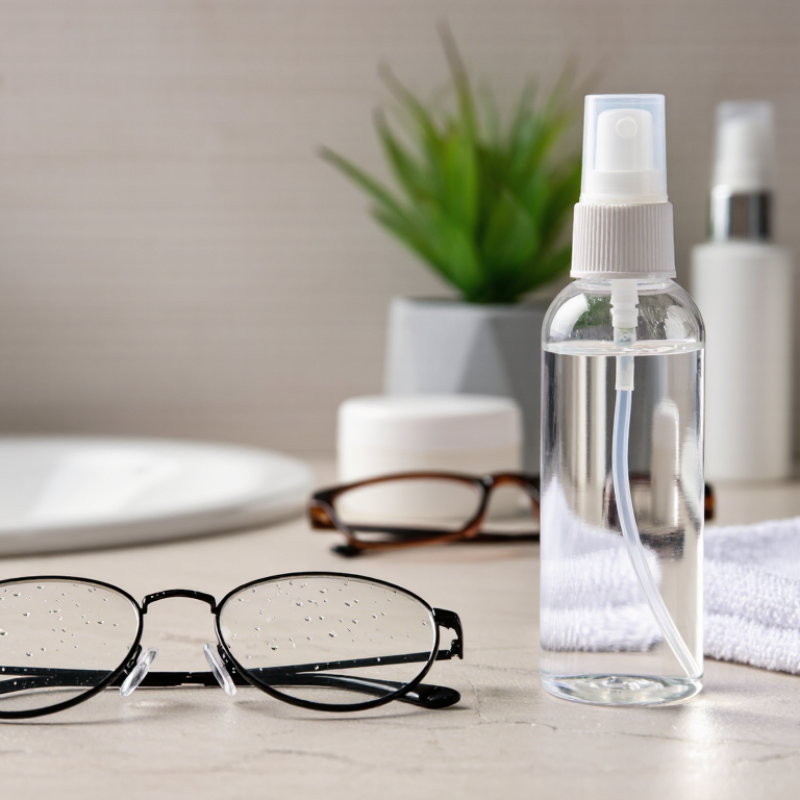
Identify your lens material before choosing a spray. Glass lenses tolerate different care than lightweight plastic lenses, such as polycarbonate or Trivex. A cleaner that works well on one material may not suit another. Check the care card or ask an optician if you are unsure. Small detail, big difference.
Then look at the coatings. Anti-reflective, scratch-resistant, mirror, and photochromic finishes can have specific cleaning requirements. Choose a spray whose label clearly says it is safe for your lens material and coatings. Avoid assuming that “lens cleaner” means suitable for every pair. It is easy to overlook a coating when you are shopping in a hurry. Check the label.
For streak-free results, remove loose dust with a clean rinse or gentle air first; rubbing grit across a lens can leave fine scratches. Apply the spray as directed, then use a clean microfiber cloth with light pressure. Avoid paper towels, shirt hems, and household glass cleaners unless your lens-care instructions explicitly allow them. If smears keep returning, the cloth may be oily, or the lenses may need professional attention. Even careful cleaning is not perfect every time.
A streak-free spray should clean lenses without leaving a slippery film or irritating residue. Check the ingredient list before buying, not just the front label. Water-based formulas with mild surfactants are often a sensible starting point, but ingredients alone cannot prove a cleaner suits every lens. Coatings vary.
Be cautious with ammonia, strong solvents, and heavily scented additives. They may be unsuitable for some lens coatings or frame finishes. The safest check is the care guidance from your eyewear maker. If the cleaner lists no ingredients or gives vague directions, pause and ask the seller for details. That takes an extra minute.
Read the spray’s use instructions, too. Some products are meant for lenses only, while others can be used on frames. Don’t assume. I used to think a quick mist was harmless, but grit on a lens can still cause fine scratches when wiped. Rinse visible dust away when the product directions allow, then use a clean microfiber cloth. If the spray causes eye or skin irritation, stop using it and follow the label’s first-aid advice. A little caution helps protect both the lenses and the person cleaning them.
A spray’s streak-free performance is easiest to judge on a clean lens under angled light. Start with glasses that have no visible dust; grit can drag across the surface and confuse the test. Use a small amount of spray, then wipe with a clean, soft microfiber cloth. Hold the lenses near a window or desk lamp. Tilt them slowly. Fine haze often appears only when light crosses the glass. That matters.
Check both lenses, including the edges near the frame. A clear center can hide residue along the rim. If streaks remain, use a fresh section of cloth rather than pressing harder. Too much pressure may leave lint or redistribute oils. Give the lens a few seconds to dry, then inspect again. Not quite clear? Repeat with less spray. The amount that feels generous may be too much.
Test more than once, using the same cloth and lighting when possible. A cloth carrying hand oils can make a good cleaner look ineffective. I used to judge too quickly after one wipe; that was not a fair test. Also check the cleaner’s instructions for compatibility with your lens coatings. A spotless appearance is useful, but it should not come at the cost of coating care.
A streak-free cleaner should fit your routine, not just promise a spotless lens. The Vision Council’s 2023 Consumer inSights report found that 76% of U.S. adults use some form of vision correction, making everyday lens care a common need. A fine, controlled mist can cover lenses evenly without soaking nose pads or hinges. A narrow spray may be easier to aim, though it can leave dry patches if held too close. Check whether the nozzle works smoothly and whether the cap stays secure in a bag. Small details matter.
Bottle size changes where the cleaner is useful. A compact bottle slips beside a microfiber cloth in a work bag; a larger one suits a desk or home cleaning station. Compare the stated volume with the bottle’s shape, since a bulky container may be awkward to grip with wet hands. For ease of use, look for a clear label, a steady pump, and directions that specify whether to spray the lens or cloth. I sometimes overvalue a tidy mist pattern; it does not prove the formula leaves no residue.
Tips: Test one spray on a clean lens first. Wipe gently with a soft microfiber cloth, and avoid pressing grit across the surface. If the bottle leaks or the spray sputters, it may be inconvenient—even when its size looks ideal.
Typical spray formats and commonly available sizes are compared below. Actual bottle dimensions and results vary by product. For best results, use a lens-safe cleaner with a clean microfiber cloth and follow the care instructions for your lenses.
| Spray Format | Typical Size | Spray Design | Portability | Ease of Use | Streak-Free Considerations | Best For |
|---|---|---|---|---|---|---|
| Pocket fine-mist bottle | About 1 fl oz (30 mL) | Small pump sprayer with a fine, controlled mist | High; fits easily in many glasses cases, bags, or desk drawers | Easy to carry and use for quick touch-ups; the small bottle may need frequent refilling or replacement | A fine mist can help distribute a modest amount of cleaner evenly. Use only enough to dampen the lens surface. | Travel, commuting, and occasional cleaning away from home |
| Compact trigger bottle | About 2 fl oz (60 mL) | Short trigger or pump head; usually delivers a more directed spray | Good; portable, though bulkier than a pocket-size bottle | The trigger is easy to grip, but may require more room in a small case | Aim carefully to avoid overspraying. Wipe with a clean microfiber cloth to reduce smears from dust or residue. | Everyday carry and home use in a compact package |
| Standard pump-spray bottle | About 4 fl oz (118 mL) | Full-size pump with a broader spray pattern | Moderate; better suited to a desk, bathroom shelf, or cleaning station | Comfortable for repeated use; the larger bottle is less convenient for travel | Use a light application rather than soaking the lenses. A clean cloth and a lens-compatible formula are key to a clear finish. | Regular household use and cleaning multiple pairs of glasses |
| Large refill-size spray | About 8 fl oz (237 mL) | Larger pump or trigger bottle, sometimes intended for home or office use | Low; generally kept in one place | Fewer replacements are needed, but the bottle can be awkward to carry and store | Large sprays can dispense more liquid than needed. Apply sparingly and avoid letting cleaner run into frames or lens edges. | Shared spaces, frequent cleaning, or keeping a cleaning station stocked |
| Reusable refillable mister | Commonly about 1–2 fl oz (30–60 mL) | Refillable pump or fine-mist top; spray quality depends on the bottle and liquid | High when filled with a lens-safe cleaner | Convenient after setup, but requires careful refilling and regular bottle cleaning | Use only a cleaner made for eyeglass lenses; unsuitable mixtures may leave residue or damage lens coatings. Do not assume plain water is a complete cleaning solution. | People who want a reusable, compact bottle and can maintain it properly |
Choosing a streak-free eyeglass cleaner starts with your lenses, not the label. Check the care instructions from your eyewear maker, especially if the lenses have special coatings. A spray intended for glasses should not contain harsh household cleaners or abrasive ingredients. If the ingredients are unclear, choose a product with clear directions instead of guessing.
Small details matter.
To test a spray, wash and dry your hands, then remove loose dust with a clean microfiber cloth. Apply the cleaner to the cloth, not directly to the lenses, unless the instructions say otherwise. Wipe gently, using a fresh part of the cloth for each lens. Hold the glasses under a lamp and tilt them slowly; streaks often show at an angle. Try the spray on one lens first, and check for haze, residue, or irritation around the frame. A quick glance can fool you. I sometimes overlook a faint smear until daylight hits it, so testing in more than one kind of light is useful. If marks remain, the cloth may be dirty, or the lenses may need rinsing according to their care instructions.
Clean the lenses, wipe gently with microfiber, and tilt them under a lamp. Fine haze may appear only at an angle.
Loose grit can drag across the lens and complicate the test. Start with a clean surface.
Use a small amount. Too much can leave residue, so repeat with less if needed.
Apply it to the cloth unless the cleaner’s instructions say otherwise. Try one lens first.
Inspect near the frame as well as the center. Residue can hide along the rim.
Use a fresh part of the cloth instead of pressing harder. A dirty cloth may spread oils.
Yes. Check under a lamp, then near a window if possible. Daylight once revealed a faint smear I had missed.
Check the lens care instructions and cleaner directions before use. Clear glass is not worth coating damage.
Not necessarily. Test more than once with clean cloth and similar lighting. My first judgment can be too quick.
Choosing the right streak-free eyeglass cleaner spray starts with understanding your lenses. Check whether they are made of glass or plastic and whether they have coatings, such as anti-reflective or scratch-resistant finishes. Select a cleaner labeled as suitable for your lens materials and coatings, and review its ingredients and safety instructions to avoid products that may cause damage or irritation.
Next, consider how well the spray removes fingerprints, dust, and smudges without leaving residue. A fine, controlled mist and a convenient bottle size can make cleaning easier at home or on the go. Test your chosen spray on a small area first, following the directions and using a clean, soft lens cloth. The best option is one that cleans effectively, dries evenly, and fits your lenses and everyday routine.