Choosing a wholesale optical lens cleaner supplier is not just a price comparison. Buyers also need consistent formulas, clear product specifications, and packaging that suits their market. A bottle may look polished in a catalog, yet its spray can leak or leave streaks on a lens. Small details matter.
This guide introduces ten suppliers in China and offers practical points for comparing their products and services. It considers factors such as available bottle sizes, spray-head design, labeling options, sample access, production capacity, and communication. These details can help retailers, optical shops, and distributors prepare better questions before requesting a quotation. They do not replace direct checks.
Product claims deserve careful review. Ask for ingredient information, usage instructions, and relevant quality documents, then test samples on suitable lens materials. Check whether the cleaner dries evenly and whether the packaging holds up during ordinary handling. A supplier’s response to specific questions can also reveal how clearly it supports buyers. Not every supplier fits.
The list should be treated as a starting point, not a universal ranking. Supplier capabilities, prices, and lead times can change, and a suitable choice depends on order volume, target customers, and packaging needs. Some comparisons may still leave unanswered questions; that is a reason to verify details directly, not to assume. With measured research and sample testing, buyers can narrow the field and identify partners whose products match their requirements.
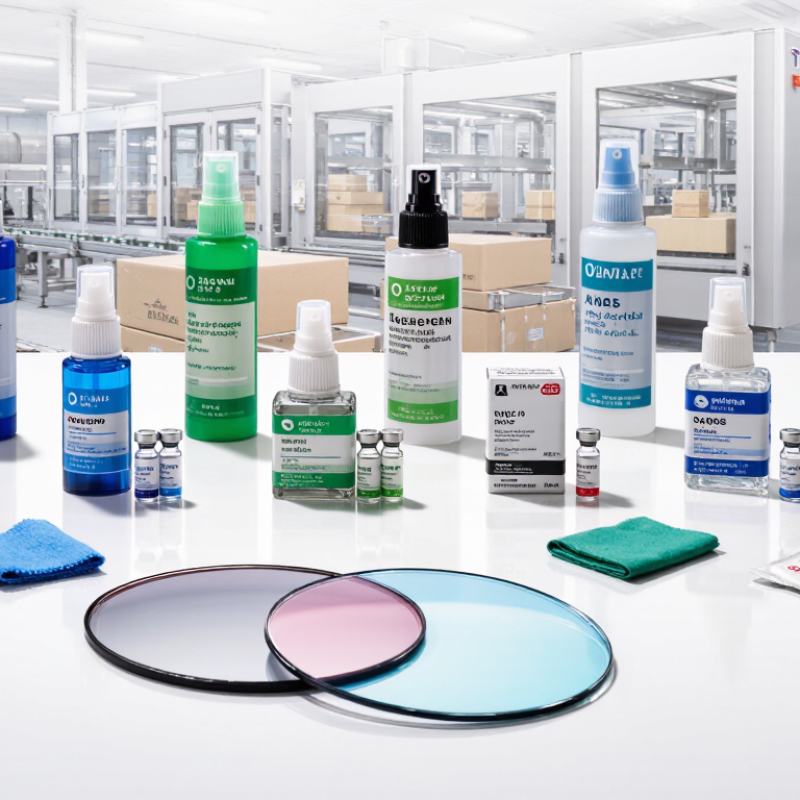
Optical lens cleaners remove fingerprints, skin oils, and fine dust without rough scrubbing. Most use water with mild surfactants, which loosen oily residue so it can be lifted away with a clean microfiber cloth. Some formulas also contain alcohol, but not every cleaner suits every lens coating. A lens may look like one smooth surface, yet anti-reflective and scratch-resistant layers can be sensitive to unsuitable chemicals. Cleaner cannot repair scratches. That is easy to forget.
The Vision Council’s 2023 Consumer inSights report found that 76% of U.S. adults use some form of vision correction. That makes routine lens care relevant to many daily eyewear users, though the report measures vision-correction use, not cleaner performance. For a practical clean, rinse off grit first, apply a lens-safe solution, then wipe gently with a clean microfiber cloth. A dry, dusty lens can turn a quick wipe into fine surface abrasion.
Tips: Check the lens-care instructions before using household sprays or tissues. Wash microfiber cloths regularly, and let them dry fully. Small detail, real difference. If residue remains, pause and check the cleaner’s directions rather than rubbing harder.
China’s optical lens cleaner market is linked to the wider eyewear supply chain, but public figures for cleaners alone remain patchy. Grand View Research estimated the global eyewear market at US$183.9 billion in 2023, reflecting broad demand for vision products—not cleaner sales specifically. The World Health Organization’s 2019 World Report on Vision estimated that at least 2.2 billion people worldwide have vision impairment or blindness. These figures offer useful context, but they should not be mistaken for a measure of China’s cleaning-product market.
China’s supplier landscape includes chemical formulators, liquid-filling plants, packaging manufacturers, and export-oriented trading companies. Some suppliers focus on bulk solutions; others provide small spray bottles and private-label packaging. A polished catalogue tells little about residue or spray consistency. Ask for recent batch records, material compatibility results, and safety data sheets, then test samples on coated lenses under ordinary shop conditions. Small details matter.
Comparisons can be untidy. Supplier claims about anti-fog performance, drying time, or coating safety may use different test methods, so request the protocol and test conditions. Check whether production batches are traceable and whether packaging remains leak-free after transport. These checks take time, and sample results may not match every lens coating, but they give buyers a more grounded view of supplier capability.
Choosing a wholesale supplier takes more than comparing unit prices. Ask what the cleaner is designed for, which lens materials it suits, and how it should be applied. A useful supplier can explain these points clearly and provide current product specifications. Request a sample before placing a large order. Test it on coated lenses and inspect for streaks, residue, or changes after repeated cleaning. Keep the cloth and application method consistent; otherwise, your results may mislead you.
Check practical details, too. Compare minimum order quantities, production lead times, packaging options, and the supplier’s process for handling quality issues. Ask how batches are checked and whether they can provide batch-specific records. Safety and handling documents should be available and easy to understand. Be cautious when claims sound absolute or technical questions receive vague answers. A polished sample does not guarantee every shipment will perform the same. That distinction is easy to overlook.
Tips: Test samples in conditions close to actual use, including with your usual microfiber cloth. Record the date, batch, and visible results. One supplier may look ideal on paper, yet communicate slowly during a simple inquiry. That matters. It is worth weighing responsiveness alongside price, even if your scoring sheet feels a little subjective.
China’s optical lens cleaner suppliers vary in formulation, packaging, and order size. The World Health Organization’s World Report on Vision (2019) estimates that at least 2.2 billion people have near or distance vision impairment. That figure signals broad demand for eyewear care, but it does not measure cleaner sales. Buyers should verify product claims and request current test documents.
A practical review of ten supplier profiles might cover liquid-cleaner makers, concentrate producers, individually wrapped wipe suppliers, microfiber cloth manufacturers, anti-fog solution makers, coating-compatible formula specialists, private-label packers, export-focused distributors, low-minimum-order workshops, and bundled-kit assemblers. These are capability profiles, not a verified ranking of named companies. Ask each supplier for ingredient information, sample packaging, material compatibility evidence, and batch traceability. Small details matter: a leaking cap can soak cloths during transit. Paperwork alone is not proof of performance.
Tips: Test samples on the lens materials you actually sell. Check for residue under bright light, and ask how the supplier controls batch consistency. A quick test is useful, though it cannot replace independent evaluation.
| Profile | Typical Wholesale Offering | Common Buyer Fit | Customization to Ask About | Key Checks Before Ordering |
|---|---|---|---|---|
| 1. Lens-cleaning solution manufacturer | Cleaning liquid supplied in bottles or as a component for a cleaning kit. | Optical retailers, distributors, and businesses assembling lens-care products. | Bottle size, label artwork, packaging format, and product documentation. | Request the ingredient and safety documentation applicable to the destination market; confirm material compatibility for the intended lens coatings. |
| 2. Spray-and-cloth kit supplier | Bundled lens-cleaning spray with a reusable microfiber cloth. | Retailers and promotional-product buyers seeking a ready-to-sell set. | Kit contents, cloth dimensions, pouch or box, and private-label packaging. | Check that the cloth and liquid are separately specified, and confirm the final packed set meets destination-market labeling rules. |
| 3. Microfiber cloth specialist | Reusable cloths in a range of sizes, colors, edges, and packaging options. | Optical shops, eyewear distributors, and buyers needing replacement cloths or kit components. | Fabric composition, size, printing, edge finish, and individual wrapping. | Request a sample and verify the material, print quality, dimensions, and wash-care instructions before approving bulk production. |
| 4. Disposable lens-wipe supplier | Individually packed pre-moistened wipes for single-use cleaning. | Travel, hospitality, retail, and institutional buyers that prefer individually portioned products. | Wipe size, sachet artwork, carton configuration, and language on packaging. | Confirm shelf-life information, storage conditions, ingredients, and destination-market compliance directly with the supplier. |
| 5. Optical-care kit assembler | Combined lens-care sets that may include cloths, cleaning liquid, cases, or other care accessories. | Eyewear stores, e-commerce sellers, and distributors sourcing multiple components together. | Component selection, set configuration, inserts, and retail-ready packaging. | Request a full component list and confirm that replacement components can be reordered consistently. |
| 6. Private-label packaging supplier | Lens-cleaning products prepared with buyer-supplied branding or packaging artwork. | Retail brands and importers developing their own product presentation. | Label design, language versions, packaging materials, and barcode placement. | Clarify artwork ownership, proof-approval steps, packaging tolerances, and who is responsible for regulatory review. |
| 7. Optical-accessory wholesaler | Lens cleaners offered alongside related eyewear-care accessories. | Buyers consolidating optical accessory orders across several product categories. | Mixed-carton options, assortment selection, and consolidated packing. | Verify which items are stocked versus made to order, and request separate specifications for each product in an assortment. |
| 8. Export-oriented cleaning-product supplier | Lens-cleaning products prepared for international wholesale orders. | Importers and distributors selling into markets outside China. | Export carton markings, document language, and destination-specific packaging details. | Confirm shipping terms, export documents, product classification, and destination-country requirements before placing an order. |
| 9. Refill and bulk-pack supplier | Cleaning liquid offered in larger or refill-oriented packaging formats. | Retailers or service businesses that need to replenish smaller dispensing containers. | Container size, closure type, outer carton, and dispensing format. | Check container compatibility, leakage protection, transport requirements, and clear handling instructions. |
| 10. Custom promotional-set supplier | Lens-care products assembled for corporate gifts, events, or promotional distribution. | Organizations seeking customized giveaways or branded eyewear-care sets. | Logo application, set contents, insert cards, and gift packaging. | Approve a production sample and confirm customization charges, production schedule, and packaging details in writing. |
Note: The profiles above describe supplier categories, not named or independently ranked companies. Product availability, minimum order quantities, pricing, certifications, and lead times vary by supplier and should be confirmed directly before purchase.
China Top 10 Wholesale Optical Lens Cleaner Suppliers?
When comparing wholesale suppliers, look beyond the quoted price. Check whether the cleaner is a spray, wipe, or concentrate, and confirm its ingredients and intended lens compatibility. Ask for a current product specification sheet and safety data sheet. Small details matter: a leaking trigger or unclear dilution instructions can create avoidable problems.
Compare like with like. Request sample sizes, case quantities, minimum order amounts, and pricing at several volume levels. Include packaging, labeling, freight, and any sample charges in your calculations. A low quote can still be costly. I would also test a small order before committing; paper specifications cannot reveal every issue with residue, scent, or spray consistency.
Supply terms deserve equal attention. Ask for production lead time, available stock, payment schedule, shipping options, and how damaged goods are handled. Confirm whether the supplier can provide batch identification and consistent documentation for repeat orders. Get key promises in writing. One awkward point: the cheapest option may be the right choice, but only if its quality stays stable across shipments. Keep a comparison sheet, and record what each supplier has not confirmed yet.
Suppliers include liquid formulators, wipe makers, microfiber cloth producers, packaging plants, and export-focused distributors. Capabilities vary.
Request recent batch records, safety data sheets, and material compatibility results. Test samples on the coated lenses you sell. Check for residue under bright light.
Not always. Test methods may differ. Ask for the protocol and conditions before comparing results.
Check caps and spray triggers for leaks. Inspect bottles after transport, too. A soaked carton can ruin nearby cloths.
Compare similar product types, sample sizes, case quantities, and order volumes. Include labels, freight, and sample charges. Low quotes can mislead.
Confirm lead times, stock, payment schedules, shipping options, and damaged-goods handling. Ask how batches are identified for repeat orders.
No. Broad eyewear figures provide context, not direct cleaner-sales data. The available market picture is patchy.
Usually. It may reveal scent, spray consistency, or residue that paperwork misses. I may be overchecking, but repeat shipments matter.
This article explains what optical lens cleaners are, how they remove dust, fingerprints, and smudges, and why their formulas and application methods matter for different types of lenses. It also introduces China’s optical lens cleaner market and supplier landscape, offering a practical framework for assessing wholesale optical lens cleaner suppliers. Key considerations include product consistency, ingredient and packaging information, manufacturing capacity, quality-control processes, communication, and the ability to meet order requirements.
The article profiles ten types of suppliers to help buyers understand the range of options available, without relying on brand promotion. It also outlines how to compare products, pricing, minimum order quantities, lead times, sample availability, packaging choices, and shipping terms. By weighing these factors together, wholesale buyers can make informed comparisons, identify suitable supply partners, and plan purchases with clearer expectations about cost, product specifications, and delivery.