0%

Finding reliable wholesale eyeglass cases in China requires more than comparing factory prices. Buyers must examine materials, hinge strength, lining quality, packaging, and production consistency. A case may look attractive in a catalog, yet feel weak after repeated opening. That small failure can damage customer trust.

Grand View Research valued the global eyewear market at approximately $115.8 billion in 2023. Its report also identifies Asia-Pacific as a major growth region. However, most major reports do not separate eyeglass cases from the broader eyewear accessories category. This data gap matters. It means buyers should combine market research with direct supplier verification, sample testing, and factory communication.

Sourcing consultant Li Wei explains, “A case is a small product, but its defects create a large customer problem.” This practical view reflects the needs of optical retailers, distributors, and online sellers. The best wholesale eyeglass cases should protect lenses, match the product’s price level, and survive ordinary transport. Not every low-cost supplier delivers that balance.

Look beyond polished photographs. Request close-up images of stitching, magnets, hinges, and interior padding. Ask for material specifications and carton dimensions. Test samples inside real shipping boxes. A supplier may promise premium quality, but written standards are more useful than enthusiastic claims.

China offers extensive manufacturing choices, especially through established optical production regions. Still, supplier selection remains imperfect. Factory audits, verified trade records, and small trial orders reduce unnecessary risk. This guide examines where to search, what to inspect, and how to compare suppliers before placing a larger order.
Where to Find the Best Wholesale Eyeglass Cases in China?

Types of Wholesale Eyeglass Cases Available in China

Where to Find the Best Wholesale Eyeglass Cases in China?

Types of Wholesale Eyeglass Cases Available in China

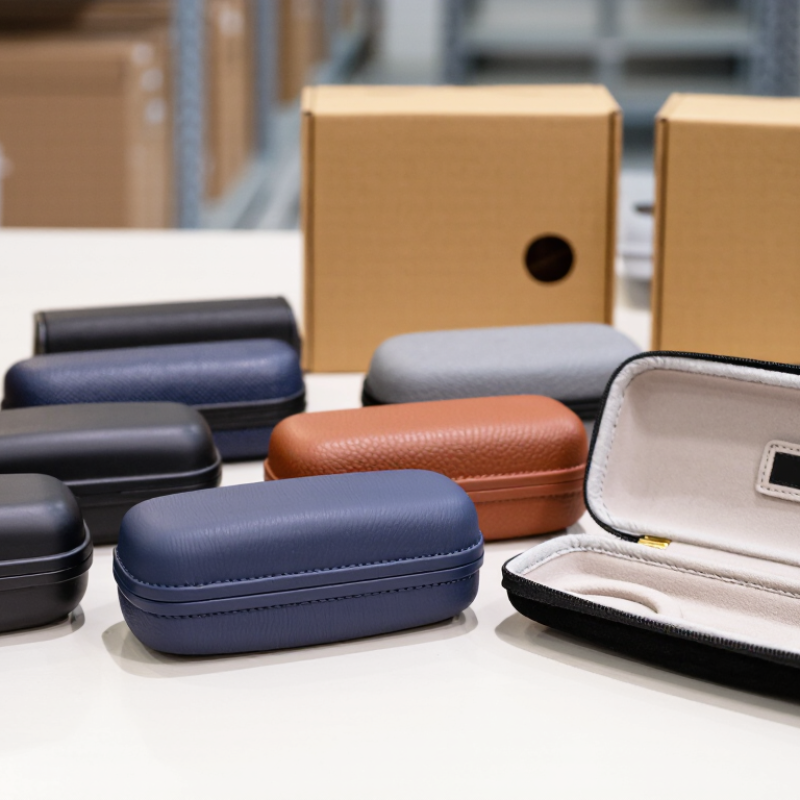
China’s wholesale market offers many eyeglass case styles for different retail needs. Hard-shell EVA cases provide strong protection during shipping and daily use. They often include metal frames, smooth zippers, and molded interiors. Some are surprisingly durable.

Soft microfiber pouches are lightweight, affordable, and easy to print with custom designs. Leatherette cases create a more polished appearance, while canvas options suit casual collections. Aluminum cases offer excellent impact resistance, but they may increase shipping costs. Foldable cases save shelf space and work well for online sellers with limited storage. In my experience reviewing supplier samples, stitching and hinge strength vary more than expected. A clean surface does not always mean reliable construction. Inspect the lining, zipper movement, odor, and edge finishing before placing a large order. Request samples in several colors. Check every detail.

Tips: Ask suppliers about material thickness, minimum order quantities, packaging, and production time. Test each case with several frame shapes, including oversized styles. Measure the interior carefully. A case that fits only one popular frame may create avoidable returns. Confirm printing durability by rubbing a logo sample with a dry cloth. Discuss replacement policies for damaged units before payment. Clear records and written specifications make supplier communication more dependable.

Key Manufacturing Regions for Eyeglass Case Suppliers

Where to Find the Best Wholesale Eyeglass Cases in China?

China’s strongest eyeglass case suppliers are concentrated in several manufacturing regions. Wenzhou, Zhejiang, is known for optical production and supporting accessories. Many factories there offer molded, leather, and metal-frame cases. Danyang, Jiangsu, also has a mature eyewear supply chain. Buyers can often source cases near frame and lens manufacturers. This may simplify quality checks and packaging coordination.

Guangdong is useful for customized cases and finished accessories. Factories in Shenzhen, Dongguan, and nearby areas commonly handle printing, stitching, and small design changes. Yiwu, Zhejiang, is better suited to mixed designs and smaller wholesale orders. However, trading companies may appear alongside direct factories. The difference is not always obvious. A low quotation can hide weaker lining, poor hinges, or inconsistent color.

Tips: Request samples from two regions. Check hinge strength, seam spacing, odor, and logo accuracy. Ask for material details and production photos. Confirm carton dimensions before ordering. A supplier’s fast reply is helpful, but it does not prove factory capability. Visit when possible, or use an independent inspection service. Region matters, but process control matters more.

How to Evaluate Chinese Wholesale Eyeglass Case Manufacturers

Where to Find the Best Wholesale Eyeglass Cases in China?

China remains a strong sourcing base for wholesale eyeglass cases, but factory selection requires evidence. Grand View Research estimated the global eyewear market at about US$115 billion in 2023. This demand increases pressure on suppliers to deliver stable quality, not only attractive prices. Statista Market Insights also reports continued growth in China’s eyewear revenue, supporting a broad manufacturing ecosystem.

Begin with production verification. Ask for a business license, workshop address, equipment list, and recent export records. A video tour helps, but an independent audit is stronger. Check stitching, hinge alignment, lining adhesion, odor, edge finishing, and drop resistance. Small defects become expensive when packed in cartons. Request samples from regular production, not specially prepared pieces. That detail matters.

Review material declarations and test reports for the exact case model. Confirm dimensions with your glasses, especially temple clearance and lens depth. Discuss minimum order quantity, mold fees, packaging, inspection standards, replacement terms, and lead times in writing. UN Comtrade trade data places China among the leading exporters in the broader bags and cases category under HS 4202, yet that code covers many products. Do not treat it as proof of eyeglass-case expertise. A low quote can look brilliant. It can also hide thin material, weak magnets, or inconsistent sizing. I would keep at least two qualified suppliers; relying on one factory is convenient, but not always wise.

Ordering, Customization, and Quality Control Processes

Where to Find the Best Wholesale Eyeglass Cases in China?

Reliable wholesale eyeglass cases begin with a supplier that explains its ordering process clearly. Request material options, case dimensions, lining samples, and packaging details before discussing price. A useful supplier should provide a pre-production sample, not only digital images. Check the hinge, stitching, odor, closure strength, and interior space by hand. Small differences matter when cases must protect different frame shapes.

Customization needs precise communication. Send logo artwork in a clear file, confirm print position, and approve the color against a physical sample. Ask about minimum order quantities, sample fees, production time, and replacement terms. I once focused too heavily on appearance and overlooked a slightly weak clasp. That was a costly reminder. Attractive products can still fail during transport or daily use.

Tips: Use a written specification sheet. Include measurements, materials, colors, logo placement, and packaging requirements. During production, request inspection photos and verify random samples from different cartons. A final quality check should review dimensions, surface marks, stitching, hinge movement, and closure alignment. For larger orders, consider independent inspection before shipment. It adds cost, but it reduces unpleasant surprises. Suppliers may promise consistent quality, yet consistency must be tested, not assumed.

Shipping, Pricing, and Import Considerations for Global Buyers

Where to Find the Best Wholesale Eyeglass Cases in China?

Shipping, Pricing, and Import Considerations for Global Buyers

China remains a major sourcing hub for protective eyewear accessories. The World Bank’s Logistics Performance Index 2023 placed China 19th globally, with a score of 3.7. That performance supports reliable port access, inland transport, and export documentation. Buyers should still compare factories near Ningbo, Shenzhen, and Guangzhou. Freight distance can change the final landed cost.

Request quotations using identical specifications. Include dimensions, lining material, hinge type, logo method, carton size, and packed weight. A low unit price can hide thick cartons or excessive minimum order quantities. My early comparisons looked attractive until air freight doubled the delivered cost. Sea freight usually suits larger orders, while air shipping works better for samples or urgent replenishment. UNCTAD’s Review of Maritime Transport 2024 also notes continuing volatility in container shipping conditions.

Importers should confirm the correct HS classification with a licensed customs broker. Classification may depend on the case material and construction. Ask for a commercial invoice, packing list, certificate of origin, and transport document. Check destination-country rules for labeling, packaging, and restricted materials. Incoterms matter greatly: FOB offers more control, while DDP may simplify delivery but reduce cost transparency. Always inspect samples before production. Small defects matter. A loose hinge or sharp edge can create returns, even when the case looks excellent in photographs.

FAQS

Which Chinese regions are known for wholesale eyeglass cases?

Wenzhou supports molded, leather, and metal-frame cases. Danyang offers nearby eyewear suppliers. Guangdong handles customization. Yiwu suits mixed designs and smaller orders.

Which region is better for customized eyeglass cases?

Guangdong factories commonly provide printing, stitching, and minor design changes. Shenzhen and Dongguan are useful for detailed accessories. Custom work needs careful sample approval.

Is Yiwu suitable for small wholesale orders?

Yiwu often supports mixed designs and smaller quantities. Trading companies may operate beside direct factories. The difference is not always obvious.

How can buyers compare suppliers from different regions?

Request samples from at least two regions. Check hinge strength, seam spacing, odor, lining, and color consistency. Photos alone are insufficient.

What details should a quotation include?

Use identical specifications for every supplier. Include dimensions, lining material, hinge type, logo method, carton size, and packed weight. Small omissions distort comparisons.

Which shipping method suits different orders?

Sea freight usually fits larger orders. Air shipping suits samples or urgent replenishment. Freight distance can change the final landed cost considerably.

What documents should importers request?

Ask for a commercial invoice, packing list, certificate of origin, and transport document. Confirm the correct product classification with a licensed customs broker.

How can buyers avoid hidden costs?

Compare total delivered cost, not only the unit price. Thick cartons, high minimum quantities, and air freight can raise expenses sharply. A cheap quote fooled me once.

Should buyers choose FOB or DDP delivery terms?

FOB gives buyers more transport control. DDP may simplify delivery but can reduce cost transparency. Neither option is automatically better.

What quality problems should buyers inspect before production?

Test hinges, edges, seams, lining, odor, and color. A loose hinge may cause returns. Sharp edges matter. I still underestimate small defects sometimes.

Conclusion

China offers a wide range of wholesale eyeglass cases, including hard-shell, soft fabric, metal, leather-style, foldable, magnetic, and eco-friendly designs. Buyers can select standard models or develop customized cases with specific colors, materials, sizes, closures, logos, and packaging. Major manufacturing regions often have strong supply networks, skilled production teams, and access to supporting industries, making it easier to compare product styles, capacities, and production capabilities.

When evaluating Chinese suppliers, global buyers should review samples, material quality, stitching or molding precision, durability, production capacity, communication, and quality-control procedures. A clear ordering process should define specifications, minimum order quantities, sampling, customization approval, inspection standards, and delivery schedules. Buyers should also compare quotations carefully by considering packaging, tooling, shipping methods, insurance, import duties, taxes, and destination requirements. With proper supplier verification and consistent inspections, businesses can source reliable wholesale eyeglass cases at competitive prices while reducing quality and logistics risks.


Ethan

Ethan

Ethan is a professional marketing specialist dedicated to helping businesses understand products, markets, and customer needs more clearly. With extensive knowledge of the company’s solutions, he regularly contributes expert articles to the corporate blog, sharing practical insights, product......