Choosing reliable eyewear protection can feel surprisingly difficult for global buyers. A case may look sturdy online, yet its hinge, lining, or closure can fail after repeated travel. This guide examines the leading hard shell eyeglass cases for 2026 through practical, buyer-focused criteria.
We consider impact resistance, interior cushioning, hinge quality, closure security, weight, and everyday portability. We also examine whether each case fits standard spectacles, oversized frames, sunglasses, or folding designs. Small details matter. A soft microfiber lining can prevent scratches, while a firm rim can protect lenses inside a crowded backpack. Odor, zipper drag, and loose stitching also deserve attention.
Our evaluation draws on product specifications, hands-on usability principles, and common purchasing concerns across different markets. We compare materials such as EVA, molded plastic, metal-reinforced shells, and recycled composites. No single design suits every customer. A compact case may save space but struggle with large frames. A heavy shell may offer confidence but become inconvenient during commuting. That trade-off is easy to overlook.
The guide also encourages careful supplier communication. Buyers should verify dimensions, packaging quality, customization options, and after-sales support before placing larger orders. Product claims are not always complete. Some descriptions sound impressive but provide little evidence. Therefore, we focus on measurable features and realistic daily use, while acknowledging where information remains limited. The result is a practical starting point for retailers, distributors, and individual buyers seeking dependable protection in 2026.
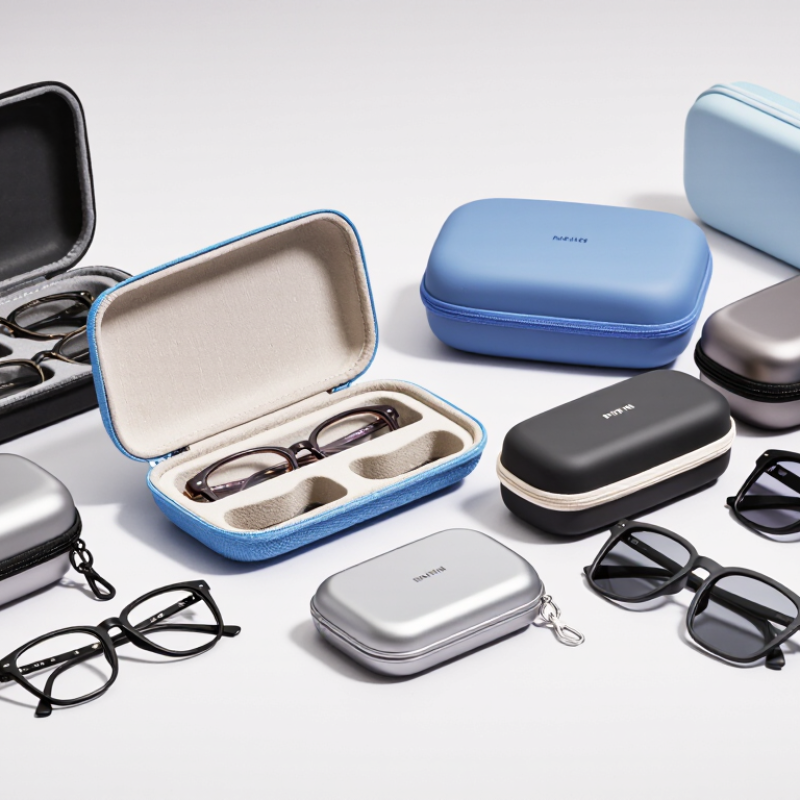
A hard shell eyeglass case uses a rigid outer structure to resist crushing, bending, and daily pressure. Common materials include molded plastic, aluminum, and reinforced fabric composites. The shell should keep its shape when placed inside a crowded work bag. However, stiffness alone does not guarantee protection. A poorly fitted case can still let lenses move and scratch.
Reliable cases combine a firm shell, soft interior lining, and secure closure. The lining should feel smooth, without loose threads or rough seams. Hinges need controlled movement, while magnetic or snap closures should hold firmly without excessive force. During product inspections, I check corner strength, repeated opening, and interior clearance. Small details matter. A case that is two millimeters too narrow may damage thick frames.
Tips: Measure the largest frame before ordering. Check lens clearance, hinge quality, and lining density. Ask suppliers for material details and sample testing records. Confirm dimensions in millimeters, not only product photos. Buyers should also examine odor, surface cracking, and uneven stitching. A lighter case may be easier to carry, but it can offer less impact resistance. That trade-off deserves attention. Even in 2026, “premium” remains an incomplete description without measurable specifications.
Global eyewear demand is expanding, making protective cases a practical sourcing category. Grand View Research valued the global eyewear market at approximately USD 115.9 billion in 2023. Its report also forecasts strong growth through 2030. For buyers, this signals greater demand for durable, export-ready accessories.
Polycarbonate and ABS shells offer strong impact resistance with moderate weight. EVA creates flexible cushioning around frames and lenses. A microfiber lining helps reduce fine scratches, although it cannot remove dust completely. This detail is often overlooked. A firm hinge, reinforced stitching, and a corrosion-resistant zipper improve daily reliability. Buyers should also check compression performance, internal dimensions, and drop-test records. ISO 780 packaging guidance supports practical handling and transport testing, but it does not certify every eyeglass case.
Tips: Request material thickness, shell hardness, and test conditions from suppliers. Compare empty-case weight before ordering. A case that feels strong may still waste valuable shipping space. Check whether the interior fits oversized frames without forcing the hinge. Moisture-resistant fabric helps in humid routes, but it is not fully waterproof. For global shipments, use clear labels, recyclable packaging, and consistent carton measurements. One weakness remains: some supplier claims use “shockproof” without measurable evidence. Ask for photographs, test data, and sample inspection before larger purchases.
Hard-shell eyeglass cases in 2026 are designed for different eyewear and travel needs. A compact clamshell case suits slim prescription glasses and small handbags. It should close firmly without pressing the lenses.
Oversized sunglasses need deeper cases with wider openings. Sports eyewear often requires a longer shell, stronger hinges, and extra interior space. For frequent travelers, a crush-resistant case protects glasses inside crowded luggage.
EVA shells are lightweight and flexible, while molded plastic offers firmer impact resistance. Soft lining matters too. It reduces scratches and keeps frames from sliding.
Buyers should check internal measurements, not only external size. A case may look spacious but still bend wide temples. That mistake is easy to make.
Tips:
Match the case to the largest frame you own. Test the latch repeatedly before bulk purchasing. Inspect stitching, hinge alignment, odor, and lining adhesion. Ask for drop-test details when available. Sample different frame shapes, including aviator, folding, and thick-rim designs. A clean appearance does not prove durability. Real handling often reveals weak corners or noisy hinges. For global orders, confirm packaging strength and consistent dimensions across samples. Some cases may need minor improvements after testing. That is not failure; it is useful evidence for a better specification.
2026 Top Hard Shell Eyeglass Cases for Global Buyers
How to Compare Global Suppliers and Product Standards
Global buying starts with a clear specification, not a polished catalog photograph. Record the case length, internal clearance, shell thickness, lining fabric, hinge type, and closure strength. Ask suppliers for material declarations and recent test reports from independent laboratories. Reports should identify the tested sample, methods, dates, and measured results. Generic certificates are weak evidence. Sampling matters. Requirements may also differ by destination, so confirm applicable product and packaging rules before purchase.
During supplier audits, I compare three production samples, not one showroom piece. Check whether glasses fit without pressure, even when frames have wide temples. Drop testing, compression testing, odor checks, and repeated opening cycles reveal practical weaknesses. Inspect stitching, edge bonding, loose fibers, and metal corrosion after humidity exposure. An acceptable supplier explains failures and records corrective action. Silence is a warning.
For global shipments, review packaging dimensions, carton strength, barcode accuracy, and inspection procedures before placing an order. Request a pre-production sample and approve a signed reference sample. Compare batch consistency across colors and sizes. Some suppliers meet a paper standard but miss basic fit. I have seen attractive cases crack near the hinge after repeated use. That lesson still influences my checklist. Reliable sourcing needs evidence, patience, and room to question early assumptions.
2026 Top Hard Shell Eyeglass Cases for Global Buyers
Buying begins with protection, not appearance. The World Health Organization reports that at least 2.2 billion people live with near or distance vision impairment. That scale increases demand for dependable daily storage. A quality hard shell should resist crushing, protect hinges, and close without stressing the frame. Measure the widest frame, including side arms. Then allow space for cleaning cloths.
Small details matter. Very much. For international sourcing, request material specifications, odor testing, stitching inspection, and drop-test results. A rigid outer shell with a soft inner lining prevents scratches and pressure marks. Suppliers should also state dimensions, weight, carton quantity, and minimum order requirements clearly. Grand View Research valued the global eyewear market at approximately USD 115.9 billion in 2023, showing why consistent accessory quality matters across many markets.
Care instructions should remain simple. Wipe the case with a slightly damp cloth, then dry it fully. Avoid hot car interiors, strong solvents, and overloaded bags. Customization may include color matching, embossed patterns, zipper pulls, or recycled fabrics. However, recycled content alone does not prove durability. Ask for test evidence and traceability. My practical concern is often overlooked: bright samples can hide weak seams. Inspect several production units, not only the approved sample. Global buyers should also review packaging volume, because oversized cartons increase handling costs and environmental impact.
It uses a rigid outer shell to resist crushing, bending, and daily pressure. Protection improves with a soft lining and secure closure. Stiffness alone is not enough.
Common materials include molded plastic, aluminum, and reinforced fabric composites. Each material balances weight, strength, appearance, and cost. Lighter does not always mean safer.
Measure the widest frame, including the side arms. Check lens clearance and leave room for a cleaning cloth. Measure carefully.
Yes. A case only two millimeters too narrow may press against thick frames or lenses. The glasses should sit without forced bending.
Choose a smooth, dense lining without loose threads or rough seams. The interior should hold the glasses firmly while avoiding pressure marks. Small details matter.
Open and close the case repeatedly during inspection. Hinges should move smoothly, while magnetic or snap closures should hold firmly. Excessive force is a warning sign.
Request material specifications, exact dimensions, weight, carton quantity, and minimum order requirements. Ask for odor checks, stitching inspections, and drop-test records. Records can still be incomplete.
Wipe it with a slightly damp cloth, then dry it completely. Avoid hot car interiors, strong solvents, and overloaded bags. Keep storage simple.
Options may include color matching, embossed patterns, zipper pulls, and recycled fabrics. Recycled content does not prove durability. Inspect several production units, not only one sample.
In 2026, hard shell eyeglass cases are defined by their ability to combine rigid protection, practical design, and dependable everyday performance. Common materials include molded plastics, aluminum, reinforced fabric, and lightweight composite layers, while features such as shock resistance, secure closures, soft interiors, moisture protection, and scratch-preventing linings help protect different types of eyewear. Buyers can choose compact cases for standard glasses, larger options for oversized frames, foldable designs for travel, or specialized cases for sunglasses and multiple pairs.
For global buyers, comparing suppliers requires attention to material quality, dimensional accuracy, production consistency, packaging, communication, and recognized product standards. It is also important to evaluate minimum order quantities, sampling procedures, delivery capacity, and customization options such as colors, logos, interior layouts, and packaging formats. Proper care includes keeping the case clean and dry, checking hinges and closures regularly, and avoiding excessive heat or pressure. A well-selected case can provide reliable protection while supporting efficient sourcing and tailored product presentation.